

Introduction
This guide was written to provide senior combat medics and PA’s with a framework to improve medic involvement in patient care at their units. Example memorandums, documents and resources are at the end.
Getting Combat Medics (68W) more involved with patients increases access to care, reduces provider burden, and strengthens medics’ clinical skills within the scope of established protocols. Medics need time in the clinic to enhance their job on the line. We can not expect them to only take vitals in garrison, and then magically handle DNBI patients while deployed without experience. Let’s get them there.
We can do this with more than just a casual reference to ADTMC, but by having medics document their decision process through notes in Genesis. Medics can handle a majority of routine encounters; documenting a concise history, conducting minor care, ordering appropriate medications, and preparing the disposition. These encounters are placed under the supervising provider’s name, not the medic’s name, and the provider finalizes the note with a message acknowledging the back-brief and agreement with the plan (examples provided below). When used appropriately and coded under 99211, this workflow allows clinics to capture productivity from walk-ins and low-acuity visits, while maintaining oversight and compliance. More importantly, it creates a regimented approach of medic oversight and feedback mechanisms to improve medic-provided care.
We will first discuss what this looks like when a patient comes to your medic, from start to finish, whether they need to be seen separately by a provider or not. Then we will discuss how you set this up at your unit. Last, we will discuss some pearls and pitfalls to ensure this is smoother and accounts for variations. If this isn’t clear enough, the providers who put this together will be cited below for contact.
Outline:
- Walkthrough of the process
- How to set this up for your unit
- Pearls, Pitfalls, Variations and Resources
- Conclusion and Authors POC
_____________________________________________________________
1.) Walkthrough: How does this look when implemented?
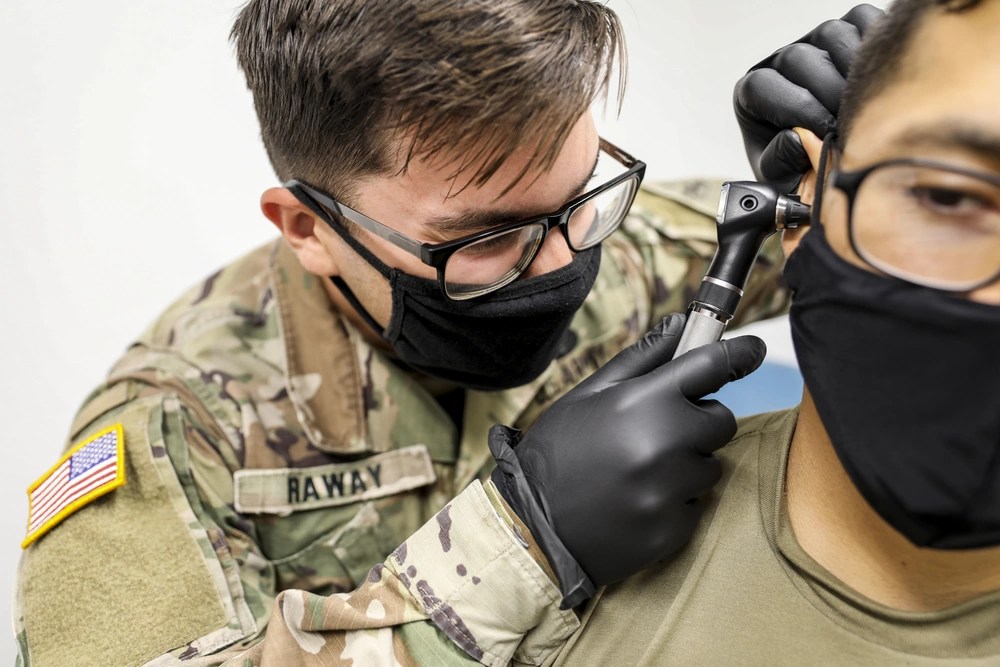
This will describe one example of how sick call screening can be done using the resources in this article. Let’s say in the Brigade, patients walk into the Battalion Aid station sometime between 0530 to 0615 (before PT formation) to be seen by a combat medic. The medic will conduct a full set of vitals, SAMPLE and OPQRST history, and a focused examination of the target area and related systems. They will also ask general review of systems (ROS) questions per the relevant ADTMC flow chart.
There are essentially 3 dispositions available to the first medic at this point. Either it is something they can handle, they need to send the patient to the provider, or straight to the Emergency Room (ER). Be careful teaching “red flags” as verbiage with ADTMC because there is a difference between “needs to see the PA now” and “needs to go to the ER.” Clearly delineate that in your classes so patients that need the ER aren’t sent to sick call to get worse. Medics also don’t need to tell every patient that they “have a red flag” just because ADTMC suggests they need to be seen. This also helps medics develop as clinicians.
If there is no obvious “provider now” criteria noted in ADTMC, the medic provides the appropriate disposition commonly referred to as Minor Care-Protocol. With provider oversight, medics are authorized to distribute medications directly from BAS stock. A full list of these medications are available in ADTMC, and units may create memorandums to expand or restrict on this list, or add some through telemedicine permission. If medications are unavailable in the BAS or supply is limited, the Soldier may be referred to the clinic/pharmacy at a later time to pick up medications.
When ADTMC referral criteria is met the patient should be referred to the clinic to see a provider. The “Advanced Enlisted Medic now” triage category exists to provide newer medics the ability to consult with a senior medic with more clinical experience, ideally an NCO. In consultation with the senior medic, the patient can then be dispositioned to either minor care, or provider now categories. Going one step further, we have a group chat in our Brigade where senior medics can request a provider consultation for patients who present to sick call screening. This enables care further, and facilitates additional consultation before a patient even presents to the clinic.
Ideally, sick call is intended for acute illness or injury. Inevitably, there will be Soldiers with chronic complaints that present to sick call. Medics desiring to go above and beyond can assist these Soldiers in scheduling a regular clinic appointment. Those with Acute-on-Chronic issues necessitate a screening, IAW ADTMC.
Regarding documentation, all care provided by medics alone in the BAS should be documented on DA form 5181. In a pinch, an SF 600 may be used. For Soldiers deemed “Minor care protocol”, this document should be taken to the clinic and used to provide appropriate orders. Clinic medics then use the DA 5181 to input the encounter in its entirety into MHS Genesis, place orders for medications, and allow the provider to code the visit. For Soldiers that need to see the provider, the DA 5181 forms the basis of the SOAP note to also start the Genesis encounter.
Inevitably, there will be soldiers that skip the BAS screening and present directly to the clinic. The process will function the exact same way for these Soldiers, though medics may skip using the DA 5181 and start documentation in MHS Genesis.
Example 1: Medic can handle on their own
You have a busy morning with 6 patients waiting in the clinic. PFC Johnson walks in with a complaint of cough and congestion at the front desk and is signed in. One of the medics, SPC Smith, takes the patient back.
SPC Smith conducts a full set of vitals, SAMPLE, OPQRST and HEENT, CV, and Pulmonary exam. With no referral criteria or red flags noted, SPC Smith then determines this Soldier likely has a viral upper respiratory tract infection. He chooses to order acetaminophen, cough drops, and pseudoephedrine. Based on his impression of the patient, he would like to give the soldier 24 hours quarters and requests a quarters slip from the provider. The provider concurs and signs it. The medic uploads the quarters slip into Genesis, gives it to the patient and briefs him on side effects of medication, thorough follow up criteria and expected prognosis, then sends the patient to the pharmacy.
The Medic gets to grow their skills, lessen the workload of the PA so they can focus more on those who need it, and the patient gets seen earlier while the clinic is able to handle more patients. The entire encounter takes SPC Smith roughly 15 minutes once he is proficient and takes 2 minutes for the PA.
Example 2: Medic refers to the PA
SPC Jones was rucking over the weekend to train for Ranger school. He suddenly felt a snap in his ankle when he stepped sideways. Because of the pain, he cut his ruck short. He took some leftover ibuprofen and wrapped his ankle, but it is now Monday morning and it still hurts to put weight on the ankle.
A Combat Medic, PFC Allen, conducts a full set of vitals, SAMPLE, OPQRST, and ankle and foot exam. He checks for Ottawa Ankle rules and finds that it is positive. As a result, PFC Allen thinks he needs to be seen by his PA so that he can get an Xray of his ankle.
If PFC Allen didn’t notice a red flag or obvious referral criteria, but felt that SPC Jones had a symptom that indicated more than a typical ankle sprain, he could reach out to his senior medic for discussion. Then he can inform his provider using a clinical decision making tool that his patient warranted further evaluation. This develops their ability to further enable care and grow under PA guidance.
Finishing the process:
Once the process is complete, the provider is responsible for acknowledging the treatment plan, coding the encounter as 99211, and signing the note. Benefits of using this clinic based ADMTC ensures that Providers have oversight of all sick call encounters in their Battalion. It also ensures that any time a patient is evaluated by a medic, that documentation exists. Finally, providers get credit for coding encounters that require their expertise, but don’t necessarily require their input. In a world of ever increasing FTE requirements, it is necessary to demonstrate to the DHA how busy a Battalion Provider can commonly be, even when they aren’t in clinic.
This method also enables PA to receive a better brief of the patient they will still see (instead of just “normal vitals”) because the medic is more comfortable doing and seeing more on their own. Eventually the medics may learn to consider more advanced diagnoses and clinical skills in some areas, which adds to the patient’s safety net and advocacy in garrison and deployed.
“How do we use this in the field?”
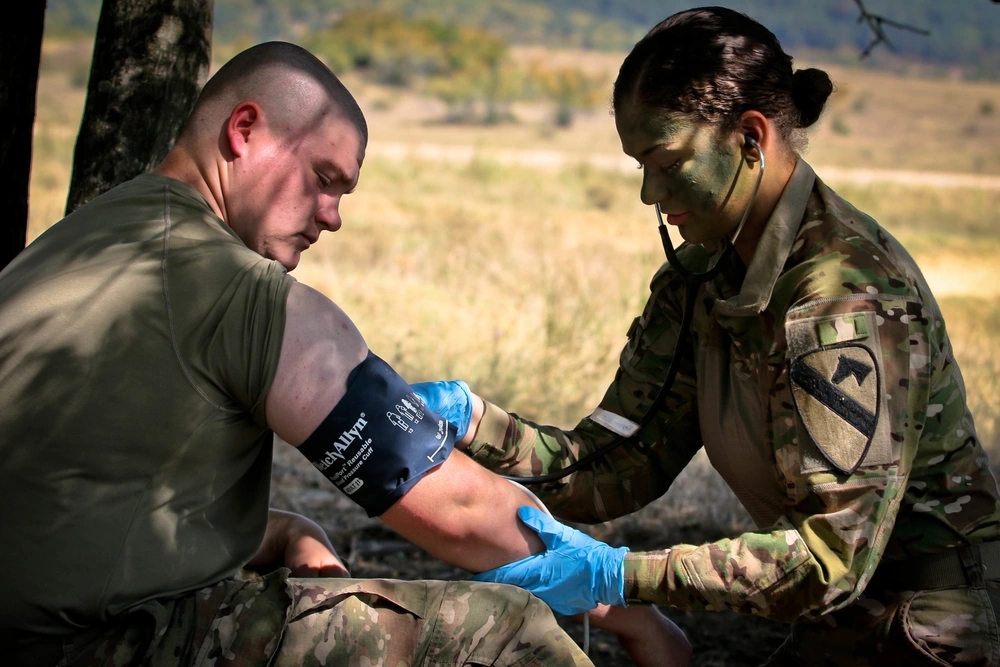
This method also works in the field. Using the vast array of modern technology for communication, line medics can communicate findings and coordinate disposition from their Role1 or 2 without having to wait for transportation and disposition from a medical provider. This keeps Soldiers closer to the fight if possible and avoids unnecessary movement. I have found that training Medics to think of ADTMC from the perspective of a line medic helps engrain the process in their minds. Thinking of medics as a force multiplier for the PA empowers them to do more and be comfortable with their own ability to triage DNBI. Those medics who become proficient in ADTMC gain more respect from their troops compared to those who struggle. Their platoon sergeants and first sergeants appreciate the decrease in real world CASEVAC numbers.
______________________________________________________________
2.) How do I set this up at my unit?
1- Get the unit on the same page
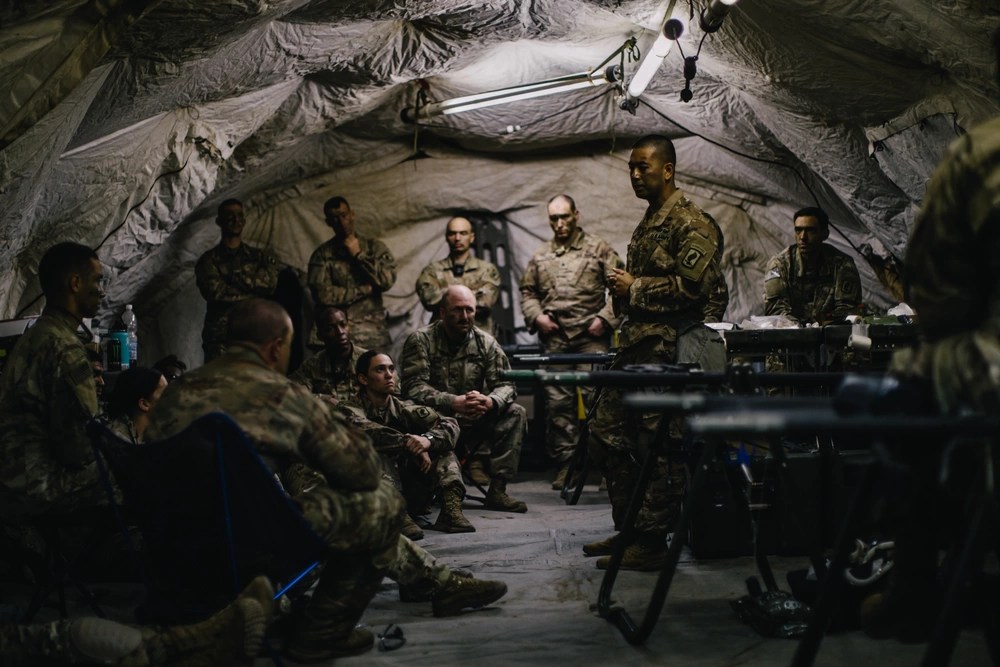
The first and most important step to implement this is to ensure your local hospital administration understands what you are doing. The most recent CPT code updates authorize billing for the code 99211, and validates that a Physician/PA/NP does not need to see the patient to code for such services provided. As a Battalion provider, you are primarily responsible for ensuring your sick call runs smoothly. Historically, Brigades are commonly co-located in the same clinic together. I recommend at a minimum that your Brigade operate with the same sick call framework to ensure that medics or providers filling in for one another do not leave gaps in care.
2- Train the medics on ADTMC and Genesis
Next, it is important to ensure that every medic performing ADTMC be trained and competent in its function. The MEDCOM PAM recommends one option being a four-week clinical validation period and coupled with 36 hours of didactic instruction to ensure medic competency. This should be revalidated every 2 years, or when new medics arrive to your unit. ADTMC does also authorize a condensed orientation and competency validation be conducted over one week provided that at least 20 soldiers be screened. Being realistic, 36 hours of direct didactic time seems impossible. There are times it is a struggle to get a single hour per week of provider directed medic training due to competing requirements from the unit. Ideally, over the course of a year every medic regardless of clinical experience would receive training on SOAP notes, ADTMC, and the basics of a head to toe physical exam as well as easily recognizable pathology from each body system. When supplementing annual 68W sustainment training, one hour per week easily will exceed the 36 hours of didactic training.
I recommend that while onboarding a new medic to the clinic that the most senior/proficient clinic medic work directly over the new medic to teach them the sick call and ADTMC process, as well as Genesis troubleshooting. In this role they will act as the clinical validator and verify that the new medic is prepared to use ADTMC and Genesis. The 20 patient requirement should be easy to reach over the course of a week or two. The Brigade Nurse is ultimately responsible for compiling and maintaining the Clinical competency folders (CAF folder) in garrison, and can be used as an additional clinical validator.
Depending on your class VIII supply, you may be able to allow medics to distribute medications directly from your BAS. Doing so allows soldiers to avoid pharmacy wait times and start treatment sooner. Whether medics hand out medicine themselves or send patients to the pharmacy, they should be briefing patients on the medicine.
As the supervising provider, you should provide a memo stating what medications that medics are and are not allowed to dispense on their own from BAS supply (example provided at the end). You should also have a couple medics designated to monitor the supply closely to determine future ordering and to ensure that medics are not burning through supplies, which may impact future operations.
Step 3: Quality Control (ongoing)
In addition to training and competency validation, there should be a dedicated quality control system in place to ensure that medics are documenting and performing all care according to the published standard. Providers already do some form of this for each other. This is essentially a peer review process for medics. Key points include verifying:
-Vital signs are documented and abnormal vitals acknowledged
-History is documented and includes chief complaint, hpi, current medications, allergies, and LMP for all females if relevant.
-Algorithm used matches the correct algorithm for the chief complaint. Pertinent positives and negatives should be addressed per the appropriate algorithm.
-disposition documented including medications, profiling, patient education, home exercise, etc.
-Consent of the provider to the agreed upon treatment plan
For example, in our Brigade, we have each medic complete 5 ADTMC peer reviews monthly and providers complete 10 for medics, ideally for medics that are in different Battalions. Having the system in place for the entire Brigade ensures that medics get a diverse experience in types of encounters and ensures that quality of care is provided. It also lightens the administrative load on each person when the Brigade team is responsible for each medics training.
________________________________________________________________
3.) “After setting this up, how can I make this smoother?”
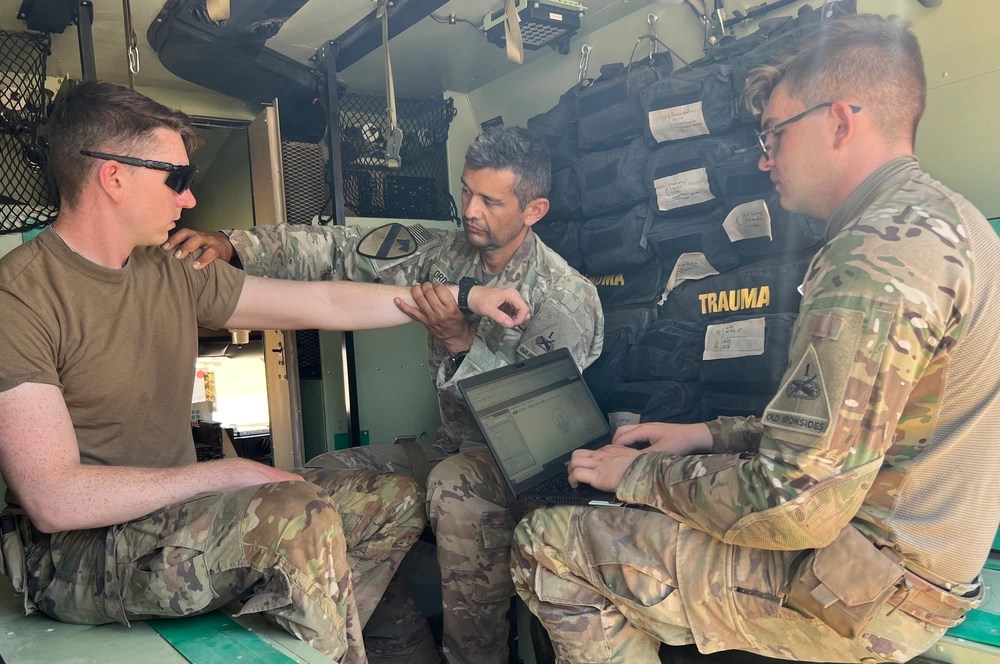
This is best implemented on a Brigade or higher level to ensure standardization and minimize administrative burden. There may be small reasons that do not require a MHS Genesis encounter, but every effort should be made that any patient contact does include at a minimum an “in-between” communication encounter. This makes sure that every patient-provider or patient-medic encounter includes some form of documentation.
Pearls:
- Use this method for any patient who presents to the clinic whether they need a medication refill or are presenting with an acute complaint. At a minimum, all patients should receive a screening by a medic when arriving at the clinic. At the discretion of the responsible provider, some patient requests may be handled via “in-between” encounters. This should be limited to medication refills that do not require provider monitoring, as well as blood pressure checks, and profile extensions that the provider determines do not need an appointment.
- All medics should be trained in ADTMC, regardless of assignment to the clinic. There will be times when a patient may present to the BAS in the middle of the day when clinic medics are busy at work. Any medic should jump at the opportunity to evaluate the patient to determine if they need acute care, can be seen at sick call another day, or instructed to schedule an appointment at the clinic.
- This is especially useful in the field. There will be times when the medic platoon is not otherwise engaged and patients walk up seeking care. Use this opportunity to train non-clinic medics on DNBI.
- Lean into socratic questioning with medics, for their development and less spoon-feeding. Occasionally ask them how they would handle a patient while deployed if you were not around. Ask if they would call for MEDEVAC or not. You can ask them to think about it and discuss it with you at the end of the day, or the next morning. If they do not know about a condition, such as abdominal patients, then assign them a little homework every now and then to get back to you. “Tomorrow morning I want you to brief me on the special tests for abdominal exams and what they mean since you didn’t know them for our patient with stomach pain.”
- Remember the group chat we discussed above to provide continuity of care. Create a culture where medics are not scared to bring patients to PA’s or bring up mistakes. Try to have ground rules such as no GIFs or Jokes in medical chat to keep notifications pertinent. Otherwise it gets muted, or overwhelming with one on one conversations.
Pitfalls:
- This may need to be modified for those on special duty status. The reader should consult local policy as it relates to Soldiers on flight, jump, or dive status. Memorandums of authorized medication may have to differ and medics may need additional training when handling those on special status. This includes a medic asking about their special duty status in plain language before giving meds that might not be available for those on a special duty status.
- ADTMC is not the be-all, end-all gospel, it is just scaffolding to grow from. Consider proficient medics with natural aptitude or senior medics eventually getting additional training, supported by unit SOP, to have more capability. For example, the memorandum draft at the end of this article provides an example of a medication list that can be approved with PA consult.
- Unfortunately, this requires more initial investment on already busy providers to get going. This is what is best for patients and the medics development, even if it slows down the day at times to provide mentorship to new medic. As specialists and NCO’s get comfortable, they can help police their own medics with common issues, learning Centor criteria, Ottawa ankle rules and similar trends. The more PA’s in the Army that do this, the more familiar more medics and their NCO’s will be in helping be a contributing member to the healthcare system.
- Not all medics may initially appreciate extra educational opportunities or responsibilities, but it’s what they need to do for their patients and will improve them in the long run. Even if they joined for college and not to be a medic, it’s their job to pull their weight and give high quality care. Recognize and reward talent when applicable, it can be frustrating. Young medics may also want to focus on TCCC alone. Remind them while TCCC it is the most important thing they do, that the most frequent thing they do, even while deployed, is DNBI care. Taking excellent care of patients DNBI complaints doesn’t just help the unit, but also improves the medics reputation with the team. “If he took that good care of my rash/knee/cough, I know he is putting that same passion into his trauma training.” Conversely, a medic poor in DNBI skills will not be viewed favorably.
Advancing Protocols:
If all the above is already handled and you developed your medics how you like, or fell in on an already established system, here is one alternative method some may be able to consider eventually:
In battalion aid stations staffed with trained and experienced medics, daily sick call can be executed effectively with a balance of medic autonomy and provider oversight. Medics conduct initial patient screening, obtain vital signs, perform focused assessments, and document encounters using DA Form 5181, or an in-between genesis encounter with the template provided above, in accordance with ADTMC. Based on clinical findings, patients are triaged into three categories: those manageable under Minor Care Protocol, those requiring review by an advanced enlisted medic, and those who need direct provider evaluation. Medics are authorized to manage routine acute complaints and administer over-the-counter medications, with all documentation forwarded to the clinic for scanning into the patient’s permanent medical record. The process ensures timely care while avoiding unnecessary delays or overutilization of provider appointments.
To maintain standards of care, the unit’s Physician Assistant (PA) remains available for real-time teleconsultation during sick call and performs monthly quality assurance reviews of 25% of all DA 5181 notes or in-between encounters. This selective review enables targeted feedback and ongoing education without creating an overwhelming documentation burden for the provider. When implemented correctly, this system allows for efficient patient flow, preserves medical decision-making autonomy for competent medics, and ensures that provider expertise is reserved for complex or higher-risk cases. It also reduces administrative redundancy by eliminating the need for provider co-signature on every routine note, provided there is a robust feedback loop and oversight mechanism. Units with medics trained in ADTMC protocols and committed to continuous quality improvement can safely and effectively operate under this model. An example of an SOP for this style of sick call is provided in the supporting documents for adaptation to your unit’s needs in section below. (POC for this second option is Robert Wolfe, PA-C, below the main author.)
________________________________________________________________
Pre-written note examples & Supporting Documents:
Provider template:
This patient was seen and treated by a US Army Medic (68W) in accordance with the Algorithm Directed Troop Medical Care (ADTMC) protocol and was found to be a category III. Medic presented the case in SOAP format. I reviewed this note and agree with the plan of action. The patient was given instructions regarding their condition, along with self-care guidance, and follow-up/ER precautions if the condition worsens. The patient demonstrated understanding of all instructions given. This patient was not seen by the provider.
Medic template:
Patient has been screened In Accordance With ADTMC, MEDCOM Pam 40-7-21 (13 November 2019).
Triage, vital signs and disposition created within this MHS Genesis encounter.
Patient was screened using ADTMC Algorithm: {Drop down list} A-1, B-1, F-4 etc…
Patient meets disposition CATEGORY III: MINOR-CARE PROTOCOL
Patient was presented to Attending Provider: CPT Joe Snuffy
Medic dispositioned the following:
-Immediate referral to medical provider
-Patient meets MCP, treatment plan below
-Patient meets MCP, but I am electing to refer to PA or physician for additional consultation to make appropriate disposition.
_____________________________________________________________
Supporting Documents & Resources:
- ADTMC PDF
- ADTMC, Interactive Website Version
- Memo example (Medication)
- Combat Medic Limited Primary Care (PDF, and order physical copies with CaC)
- Sick Call Screener Course (Navy, but free resources)
- Next Generation Combat Medic Google Drive (Check Sick Call Folder)
- Established Advanced Sick Call SOP (second option)
___________________________________________________________________
4.) Conclusion & POC: What should we add?
We can develop this article as we receive FAQ’s and input from other PA’s implementing this.
Through proper training, medics can extend the capability of a provider to a range well beyond the BAS. We recommend more units implement this to get more medics prepared for LSCO through DNBI care, while helping improve our patients access to care in garrison and in the field. If there are any questions you have about implementing this at your unit, please look up and shoot a message to the following provider(s).
— Craig Roberts, PA-C
Craig.r.roberts5.mil@army.mil
Roberts.craig@gmail.com
Additional content added by:
Advanced screening and SOP POC:
Robert Wolfe, PA-C
robert.a.wolfe109.mil@army.mil
 Next Generation Combat Medic
How do I find out more about the following website:
ADTMC, Interactive Website Version
LikeLike