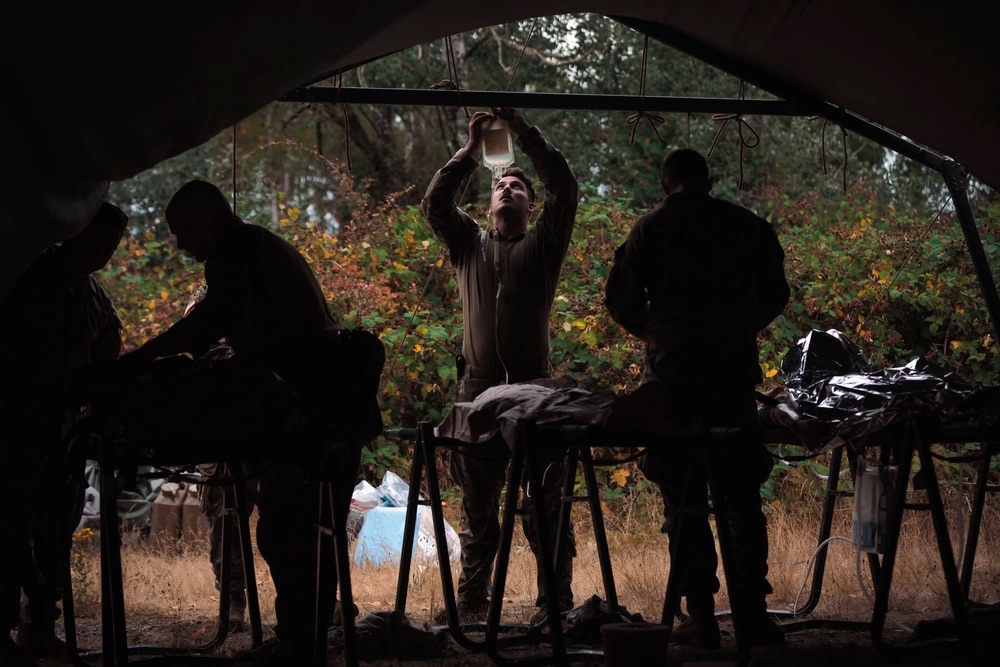

As military operations evolve, the challenges of providing effective casualty care and evacuation during large-scale combat operations become increasingly apparent. The devastating consequences of inadequate medical treatment can lead to catastrophic losses, underscoring the urgent need for a comprehensive approach to prolonged care in the battlefield. The U.S. Army’s Combat Medics, designated as 68Ws, play a crucial role in minimizing casualties and preserving combat effectiveness. However, the current state of training, equipment, and overall preparedness poses significant hurdles that must be addressed.
The Reality of Modern Combat: Lessons from Ukraine
Recent conflicts, particularly the ongoing war between Russia and Ukraine, provide vital insights into the challenges faced by medical units in large-scale combat operations. Ukrainian forces have struggled with equipment shortages and logistical constraints, significantly hampering their ability to provide timely and effective medical care to their wounded soldiers. This reality emphasizes the necessity for the Army to prioritize advanced training and better resources, allowing medics to respond effectively to complex medical emergencies in austere environments.
The Army must recognize that the dynamics of modern warfare require a reevaluation of existing protocols and strategies for prolonged casualty care. The current Training and Doctrine Command (TRADOC) and the Medical Center of Excellence (MEDCoE) must expedite their efforts to identify solutions that address these pressing issues. If we are to enhance the capabilities of our medics, we must confront the realities of equipment shortages and knowledge gaps head-on.
Bridging the Gap: Nursing Skill Development for 68Ws
One significant area of improvement lies in the skill development of 68Ws. Currently, the training provided to Combat Medics often falls short of preparing them for prolonged care scenarios, particularly in multi-system trauma situations. While the foundational training covers essential trauma care, it lacks depth in advanced nursing skills, anatomy, and physiology necessary for managing long-term patient needs.
To ensure that 68Ws are equipped to provide effective prolonged care, the Army should integrate nursing skill development into the existing medic training programs. This would not only enhance their ability to manage complex cases but also ensure that they are better prepared for prolonged field care when resupply is not an option. By focusing on advanced nursing competencies, medics can gain the confidence and expertise required to stabilize patients for extended periods, ultimately saving lives in critical situations.
Advancing Prolonged Care Training: A Call for Comprehensive Courses
In addition to enhancing nursing skills, the Department of Defense (DoD) and the Army must develop more robust prolonged care courses that align with successful civilian-led austere medicine training programs. Civilian courses often emphasize hands-on experience and practical skills, allowing participants to apply knowledge in real-world scenarios. By adopting similar methodologies, the Army can ensure that 68Ws receive training that reflects the complexities of battlefield medicine.
These courses should encompass advanced medical techniques, such as critical airway management, cardiac monitoring, and the use of portable diagnostic tools. Furthermore, they should incorporate telemedicine capabilities to facilitate real-time consultations with experienced providers, thereby expanding the scope of care available to medics on the front lines.
The Case for Equipment Upgrades
The current Sets, Kits, and Outfits (SKOs) provided to medics are inadequate for the demands of prolonged care. A thorough capability gap analysis must be conducted to identify and rectify the equipment shortages that inhibit medics from delivering optimal care. Essential tools, including advanced airway equipment, ultrasound devices, and pharmaceuticals, must be prioritized to ensure that 68Ws have the necessary resources to manage complex cases effectively.
Incorporating advanced technology, such as wearable health monitors and telemedicine systems, can revolutionize the Army’s approach to prolonged care. By leveraging technology and automation for logistics and resupply, we can ensure that medics have the support they need to provide life-saving care in even the most challenging environments.
Conclusion: A Path Forward for Prolonged Care
The implications of effective prolonged casualty care in large-scale combat operations cannot be overstated. The lessons learned from modern conflicts, such as the Russia-Ukraine war, serve as a reminder of the urgent need for the U.S. Army to prioritize both equipment procurement and advanced training for its medics. By integrating nursing skill development and establishing comprehensive prolonged care courses, the Army can better equip 68Ws to face the challenges of modern warfare.
Investing in the training and resources necessary for effective prolonged care will ultimately minimize the human cost of combat and preserve the health and well-being of military personnel on the front lines. As we move forward, it is imperative that we embrace a proactive approach to address the unique challenges of prolonged care in large-scale combat operations.
(For more on how to start training on Prolonged Field Care, reference the NGCM post on Prolonged Field Care for the Combat Medic )
Brad Robinson
MSG, USA
BSMC Medical OCT (L92)
Task Force Sustainment, Operations Group
Joint Readiness Training Center
Cell: 254-350-9965


Leave a Reply