
Authors:
James H, PA-C, 18D, 68W jaime_713@proton.me
Jonny W, 70B, 68W jonnytwilson@outlook.com
…and many more PA’s and Senior Medics.
Please email us if you have questions about the article, or if this was helpful to your unit.
This is a guide for how your unit can fit training in weekly, written by PA’s, Medical Officers (MEDOs), and Senior Medics who have successfully managed schedules where training is available most weeks at their units.
We are handing you a recipe to success.
Here is what your future BN can look like, assuming Thursday is your chosen training day:
Thursdays at around 0630-0800, sick call is ran by BN PA and some of the medics.
Then around 0900-1200 is designated as predictable protected time for medical training. Every. Single. Week.
A class is taught by a medic, SME, or the PA, and then some hands-on skills are practiced after the class, before medics are released.
Then, after 1300 normal clinic operations and duties resume for PA and select medics.
The difference between medics who receive frequent training and those who just go to the motorpool every week is staggering. Even when SOF medics go to refresher, those who do excellent come from units who train often, and those who fail and have to come back to try again 6 months later come from units that don’t prioritize training. Your initial training does not matter as much as your unit culture.
Currently, medics in many units only train for a couple hours every 3-4 months, with some doing even less.
Let’s compare that to conducting ~2-3 hours of training, about 40-45 weeks a year, to account for holidays and missed days.
That would equate to ~80-135 hours a year versus ~6-12 hours, maybe 20 a year if generous. Isn’t that insane?
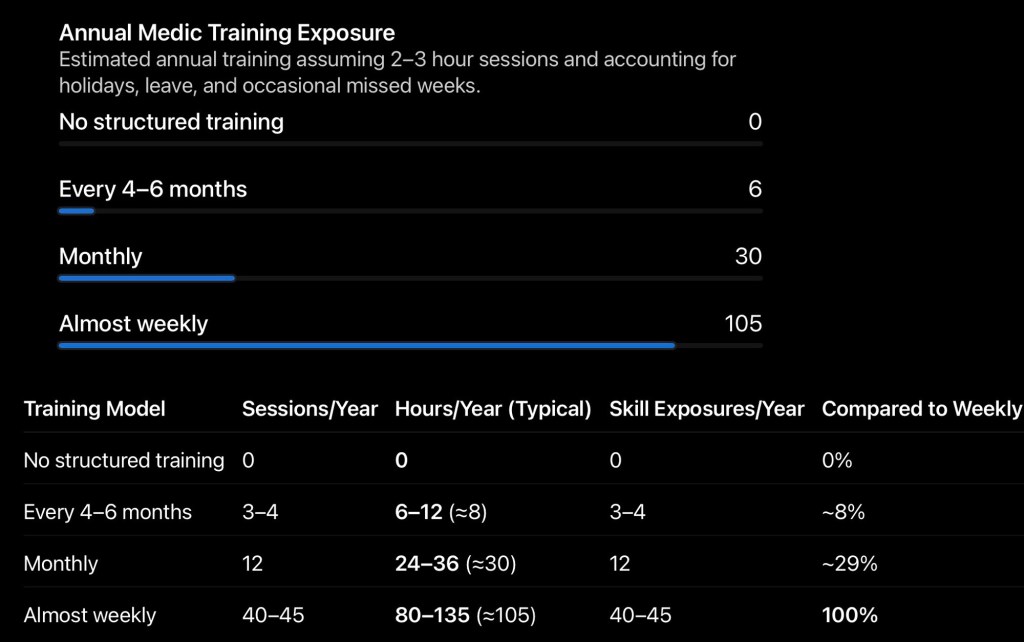
12 times more training. Tons more skills, trauma and DNBI capability.
Ask Yourself: “When a service member is wounded or sick, who do you want taking care of America’s best?”
The authors BN accomplished this with a PA, MEDO and PSG working together to make this happen, and so have many others. Here is how you can, too. The article will teach you how through the following sections:
- Pick A Day
- Getting this on the official calendars.
- How to justify to Leadership
- Making training visible to leaders
- Finding your topics.
- Staying persistent.
- Pearls & Pitfalls
Chapter 1 – Pick a day, Stick to it, and Fight for it!
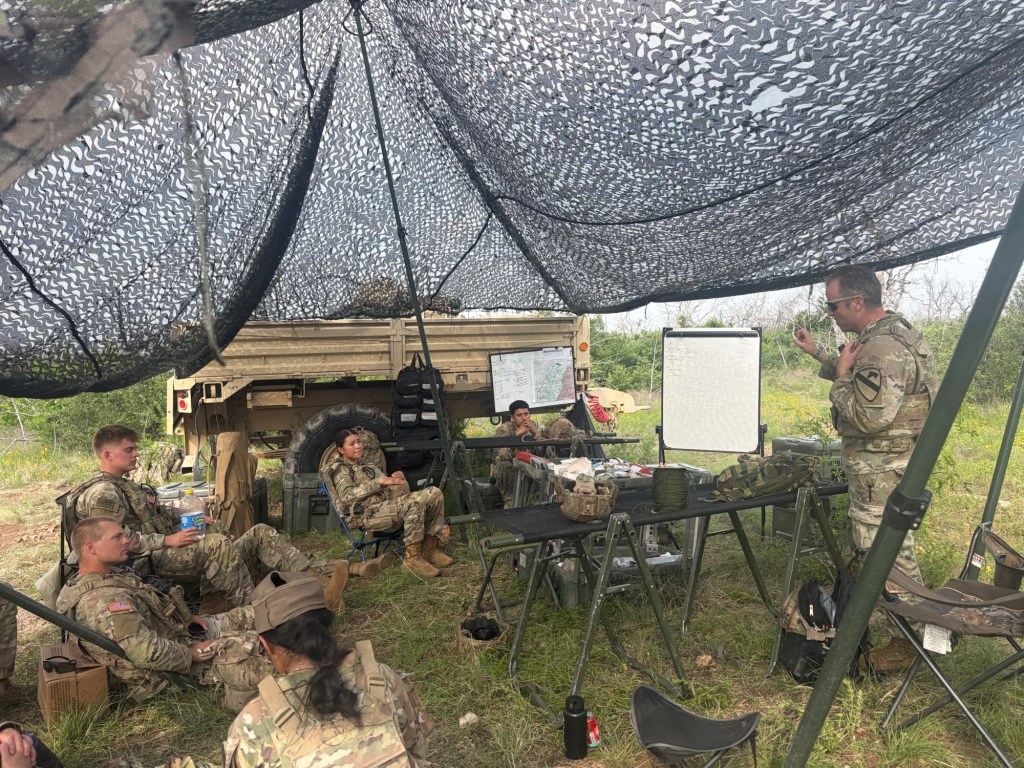
The most important task a PA and Senior Medic can do is professionally develop the medics. Not merely going home after the clinic or using the entire admin day for profile renewals and less important clinic tasks. So, how can we fit training into a busy schedule?
First, we need to choose a day, but not a random one. In order to choose the right day, you will need to know a little background into the complexities of a BN PA’s schedule from week to week.
When a PA gets to their units, they will have three bosses:
1st – BN CDR, 2nd – BDE PA, and then DHA.
DHA and the Brigade PA set your schedule. Each of these bosses has input into your schedule. With three bosses, how can we possibly squeeze in time to train medics?
Each week, a PA can have one Medical Officer of the Day (MOD) shift 0900-1600, ~40 appointments (depending on FTE), and daily sick call from 0600-0830, One morning to train medics (Thursday 0900-UTC) and the rest of the time dedicated to Genesis messages, lab/imaging results, notes, profile review boards, SOP development, PHAs and any other admin tasks get thrown in on any given week. Without careful planning, that amount of admin tasks will easily consumes training time. A BN PA must choose their training day well in advance. They must be purposeful and driven to make the time to train their medics, provide high quality health care and serve as the BN PA every week. Not just every few weeks or months.
BN PA must set an admin day to knock out tasks. This is where the sacrifice of time comes in. This enables training of the medics on that designated admin day, with catch up on admin tasks afterwards. If you do not choose it, it will be chosen for you. This is where another of the three bosses comes in. The BDE PA sets the BN PA’s schedule 1-3 months in advance with their input on field training exercises, leave, etc. Start there. We designated every Thursday as the day back at the BN being present to train medics which is sent to the BDE PA every month for the schedule being done 2-3 months out.
We recommend avoiding Mondays and Fridays as long holiday weekends tend to cancel those, and you also want those days to put out urgent fires. We recommend Wednesday or Thursday, as you have time to prepare for it, and can catch up the day after. BN meetings, schedules, or typical “jump/range” days may mean using other days. Know what day and time will works best so your training works with your units schedule.
The best time of day that works for most is right after sick call, that way urgent medical issues are addressed. Typically ending for most around 0800-0830. You may have up to 1200/1300 for training. Training could go later, if less medics are needed for clinic work after 1300, lunch is provided, or the PA is not the instructor that day and can return to the clinic. This gives a BN from around 0900-1200 to focus on training. If admin time is managed appropriately, the afternoon time after training can be when a BN PA can do the actual admin catch up.
However your BN makes it happen, dedicating one day a week to training medics is crucial, it must be planned out in advance so the scheduled appointments and MOD don’t interrupt training time.
Chapter 2 – Plan training through the official channels
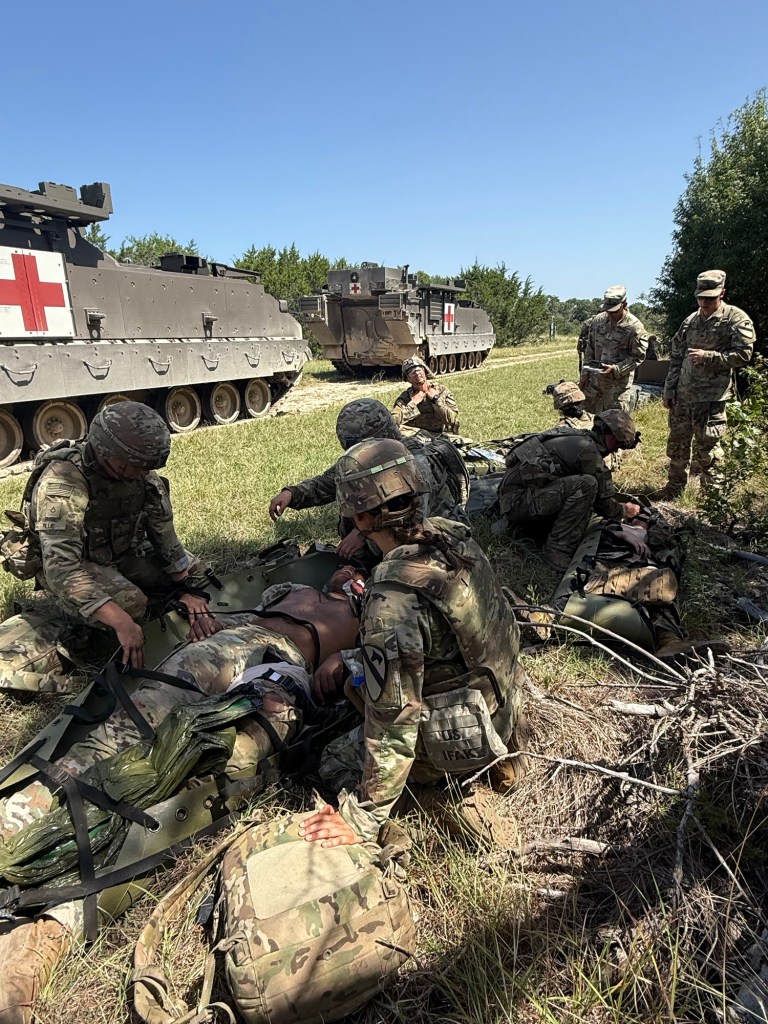
The MEDO’s role should not be underestimated in this. The MEDO serves as the critical link between the tactical and operational requirements of the unit and the technical medical requirements of AMEDD. To be effective, the MEDO must remain synchronized with higher headquarters’ training guidance, the PA’s and Surgeon’s intent to improve 68W clinical proficiency, the Medical Platoon Sergeant’s execution plan, and the unit’s long-range training calendar.
If medical training is not formally briefed, resourced, and placed on the calendar, it will be treated as optional. If it is treated as optional, it will eventually be canceled. Protecting medic training begins by making it visible, deliberate, and defensible within the unit’s established training management process.
Once government time, personnel, funding, facilities, supplies, or outside instructors have been committed to scheduled medical training, canceling that training for low-yield tasks creates a potential waste-of-resources issue. If leadership still wants to cancel the training, respectfully ask who is accepting responsibility for the wasted government resources, lost training value, and readiness impact.
The point is not to threaten leadership. The point is to make the decision visible as a command-level risk and resource-management decision.
This is especially true within Brigade Combat Teams, where many HHC’s have been restructured to lose their scout and mortar platoons, making the medical platoon the most personnel heavy (and subsequently task-reliant) population.
Many companies conduct weekly training meetings, which will be the primary forum where your training will be pitched to the company commander, typically beginning 8 weeks out. Ideally both the MEDO and Medical PSG are in attendance to brief the company commander on all planned medical training. If you do not have a MEDO, someone needs to be delegated to do their role until your unit receives one.
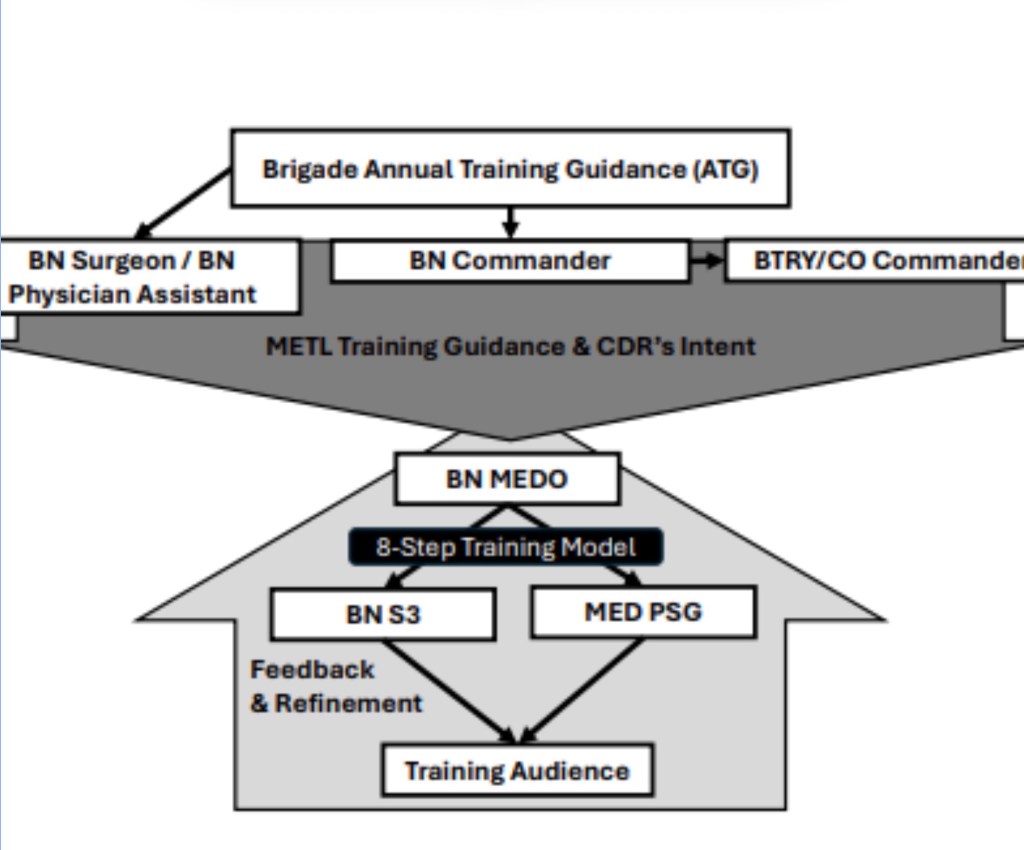
Medical Officers and PSGs must continually advocate for their medical training during these weekly training meetings, and requesting outside resources needed such as role-players, vehicles, aircraft, training areas and facilities.
When this training is a BN level event (Combat Lifesaver, MASCAL, etc), ensure your MEDO gets with the S3 shop to put it on the battalion calendar. This will ensure you are not operationally overwritten – or worse – forgotten about, and will enable organizational level leaders to attend if so inclined.
Once you have started training frequently, you can also mention during training meetings what you did last week. This helps show others what you have been accomplishing when you’re not able to fork over medics during this time.
Example:
“This Thursday we are bringing in a CRNA from the on base hospital to teach airway training.
Next Thursday we are going to give a class on lower back pain, and then practicing IV’s afterwards. ”
Chapter 3 – Be prepared to justify to leadership.
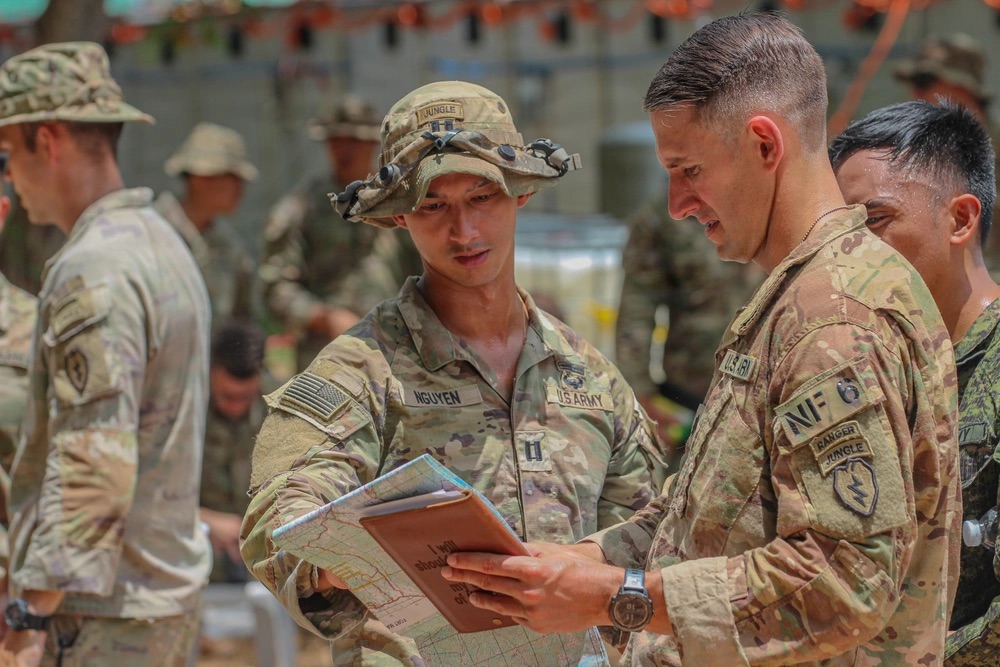
A medic, PA, MEDO, or senior medical leader may spend the entire week preparing to teach a scheduled Thursday morning training event. In other cases, that leader may have coordinated a guest instructor, such as a physician, CRNA, PA, or other subject-matter expert, to provide specialized instruction. The training has been on the calendar for months, and significant planning, coordination, and preparation have already occurred.
Then, on Wednesday afternoon, the unit looks to the medical section to cancel the training at the last minute so the medics can be reassigned to pull weeds in a parking lot or complete some other allegedly “critical” tasks.
This raises an important leadership question: How do we effectively communicate the operational importance of medic training to unit leadership?
To gain leadership support, we must speak in terms they understand: readiness, lethality, risk mitigation, force preservation, and mission success. Some leaders may incorrectly assume that once a Soldier graduates from a medical MOS-producing course, they are fully trained and will remain proficient indefinitely. That assumption is fundamentally flawed. Medicine is perishable, dynamic, and constantly evolving. Clinical knowledge, procedural skills, trauma protocols, medications, equipment, and operational requirements all change over time.
No commander would accept the argument that snipers are “good to go” if they only fired their weapon once a year. That would be professionally indefensible and operationally negligent. The same standard must apply to combat medics. If we expect medics to save lives under fire, during mass casualty events, in austere environments, and during prolonged field care, then we must protect their training time with the same seriousness we apply to any other mission-essential combat skill.
Let’s discuss 4 points that you need to prepare for before you sit down with the BN commander, and BN CSM.
Point 1 of 4: Be able to articulate to BN leadership why better medics increases the battalion’s ability to accomplish its mission:
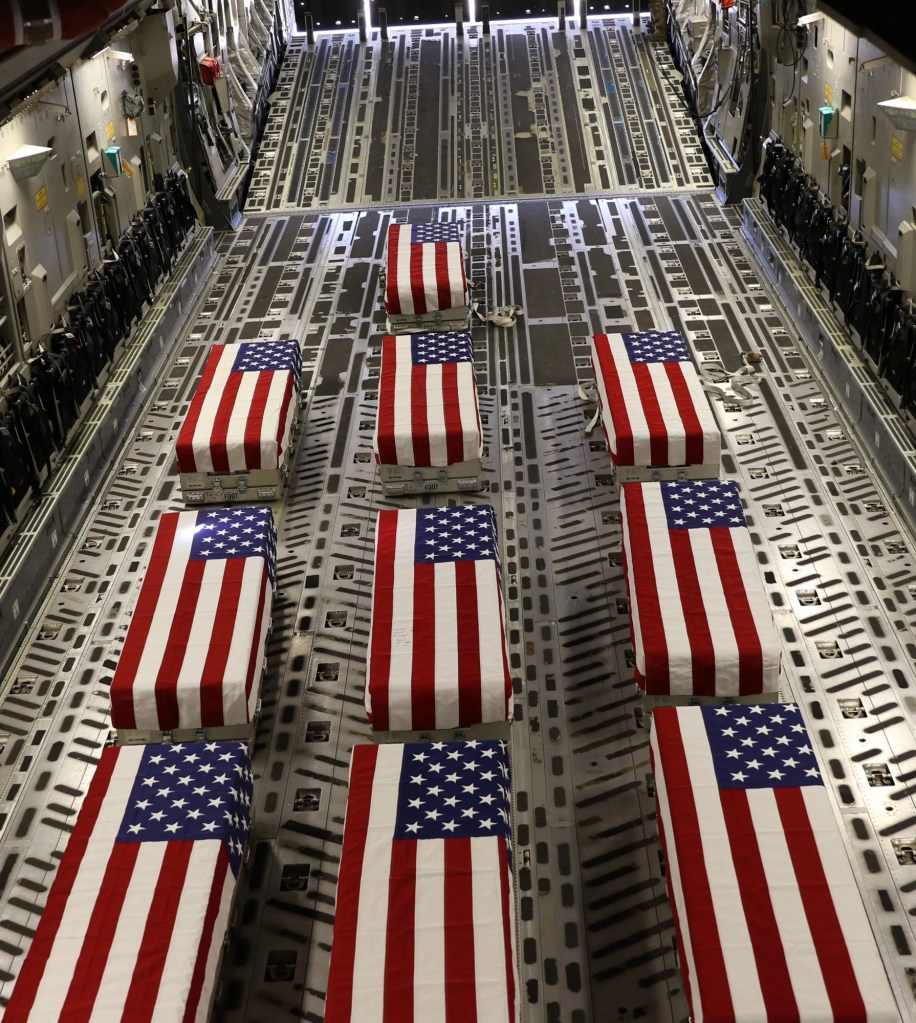
First and most important part to discuss: Poorly trained medics increase preventable death, disease and non-battle injury, evacuation requirements, command risk, and post-incident scrutiny. Better-trained medics save lives, preserve combat power, reduce avoidable illness and injury, and decrease the likelihood that a commander will have to answer for preventable outcomes, face unnecessary investigations, or help grieving families understand why their service member did not come home.
“But we aren’t going to a combat deployment, relax.”
Respectfully, that is exactly why medic training still matters. Non-combat deployments do not eliminate medical risk; they simply change the mechanism of injury and illness. Vehicle rollovers, training accidents, heat illness, infectious disease, delayed diagnosis, and disease and non-battle injury remain command problems. They affect readiness, reduce combat power, increase evacuation requirements, and can create preventable adverse outcomes that follow the chain of command long after the event is over.
A soldier with community-acquired pneumonia identified early by a well-trained medic may only require a short course of antibiotics and remain with the unit. That same soldier, if missed until respiratory compromise develops, may require MEDEVAC and removal from the fight. A soldier with early appendicitis recognized by a proficient medic can be evacuated and treated appropriately. If missed, that same soldier can progress to peritonitis or sepsis, turning a manageable condition into a preventable tragedy. A fatal heat stroke that was not identified early or managed correctly is not simply an unfortunate event; it is a leadership failure, a medical failure, and a needless death.
The commander does not just own combat losses. The commander also owns preventable loss of life, preventable disease and non-battle injury, avoidable evacuations, and the investigations that follow when the unit failed to train the people responsible for recognizing and managing those conditions. Medic training is not a luxury reserved for combat deployments. It is a readiness requirement, a force-preservation measure, and a direct risk-reduction tool for the battalion commander.
This point alone should get leadership’s attention. However, we do not believe in “good enough,” so we are giving you additional command-facing arguments and showing you how to tie them together.
We also recommend getting the battalion CSM involved early. The CSM is responsible for the health, discipline, readiness, and welfare of the formation. If the CSM understands that medic proficiency directly affects soldier survivability, DNBI rates, evacuation burden, and command risk, he can help protect training time and reinforce its importance across the battalion. He may also be able to provide role players, training support, or command emphasis when the medical section needs it.
Company leadership should also be included. When company commanders and first sergeants see medics training seriously, they often want to participate because they immediately recognize the operational value. In one example, a company 1SG walked by during medic training, stopped what he was doing, became a casualty role-player, and then used the opportunity to teach tactics to the medics afterward. That is exactly the type of leadership involvement we want: medics improving clinical proficiency while the unit simultaneously reinforces tactical competence.
The goal is not to argue with leadership. The goal is to make the risk impossible to ignore. Better-trained medics save lives, reduce preventable evacuations, preserve combat power, decrease DNBI impact, and protect the commander from preventable outcomes that could have been avoided through disciplined, recurring medical training.
Point #2 of 4 – Do your homework, access the command climate, and commander’s priorities
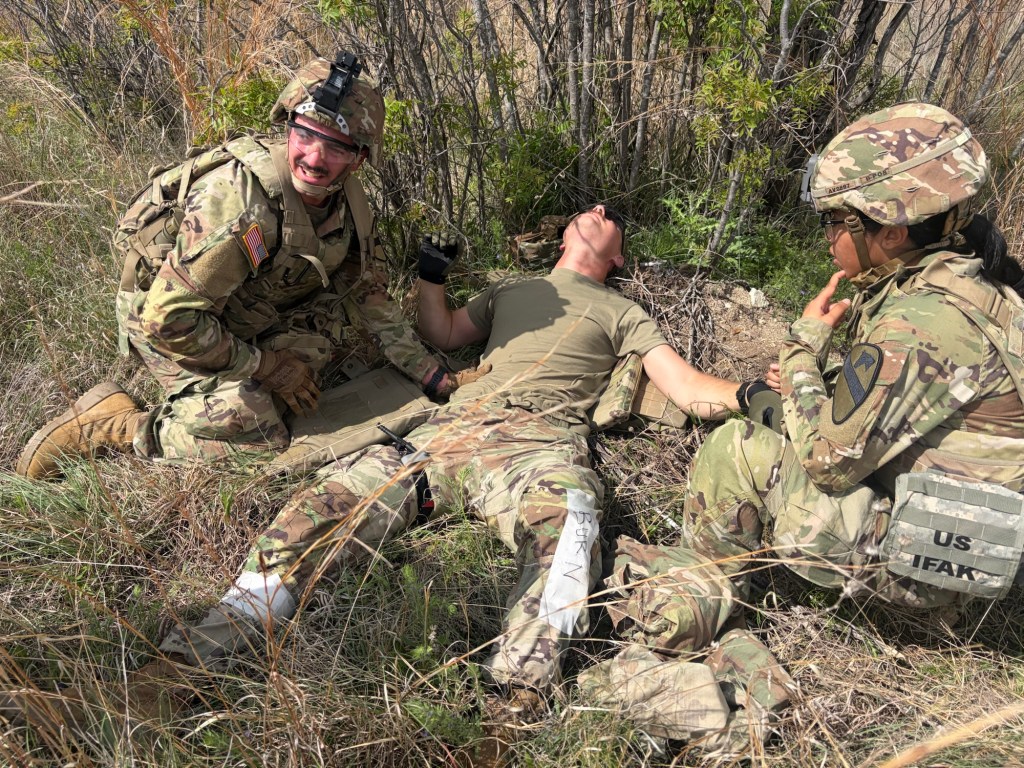
2.1 Part One: Leadership’s Perspective
To influence battalion leadership, you must first understand how battalion leadership thinks.
Commanders operate under intense time pressure. Company commanders typically have only 12 to 24 months in command, and battalion commanders generally have 18 to 24 months. During that limited window, they must demonstrate measurable performance, improve readiness, distinguish themselves from their peers, and earn a strong evaluation on their Officer Evaluation Report. As a result, commanders naturally focus on the Unit Status Report, mission readiness, inspections, training requirements, and any task that directly affects how their formation is assessed.
If you want leadership to protect medic training, you must connect medic proficiency to the commander’s priorities.
That means you need to understand your unit’s Mission Essential Task List, the 68W Individual Critical Task List, the 68W Scope of Practice signed by LTG Mary Izaguirre on 4 June 2026, and relevant E3B and EFMB tasks. More importantly, you must be able to explain how medic proficiency directly supports the unit’s METL, improves readiness, reduces risk, preserves combat power, and helps the commander succeed during their limited time in command.
Do not frame medic training as “medical training.” Frame it as a commander’s readiness requirement.
A medic who has mastered the 68W scope of practice is not simply better at medicine; that medic makes the battalion more capable of accomplishing its mission. Better-trained medics reduce disease and non-battle injury, improve casualty survivability, reduce preventable evacuations, strengthen field training performance, and decrease the likelihood of adverse outcomes that create investigations or command scrutiny.
When you can clearly show that medic proficiency supports METL execution, USR readiness, risk reduction, and soldier survivability, medic training stops being seen as optional, and instead it becomes a command priority.
2.1.a Build your case
If you don’t think those are enough, get with your senior medic and run trauma lanes for each of your medics. Grade them strictly. If a majority fail or do poorly, then you have additional metrics to brief. You can also include major weak points during sick call, such as medics doing poor exams, or treatment.
2.2 Part Two: Red Team your pitch to the commander
Try to predict what your BC will say when apprehensive about you pitching this. (you can have some of your peers act as the commander and have them as questions based on their experience.)
Does the commander worry about your schedule conflicting? Show that you have the perfect time chosen with an explanation, and an alternate day. Build the commander’s confidence that all this fits within your unit’s calendar.
Is the commander he worried about what you will teach and where? Have the next 90 days planned, show the synergy with unit objectives, show how your end states benefit both the commander, the unit, and his service members. and Have your PACE plan for location ready to brief.
How will you acquire the supplies for the classes? Make sure you have all supplies and equipment coordinated. If funds are needed, make sure you have the lines of accounting identified and how all training and logistics will be sustained and enduring beyond your time in the unit. This will be a culture shift.
So now instead of just showing your BC how much better your medics will be using our math during the intro, or by saving more lives, you can also include how this helps the unit METL, E3B prep, 68W ICTLs, and 68W scope of practice. You already have a great time chosen that fits in units’ calendars, and the first dozen lessons are already prepped. This creates more tangible buy-in. This is a necessary reality, even without a combat deployment looming on the horizon.
Point #3 of 4 – Be great at what YOU do
(Be a reliable resource for the command.)
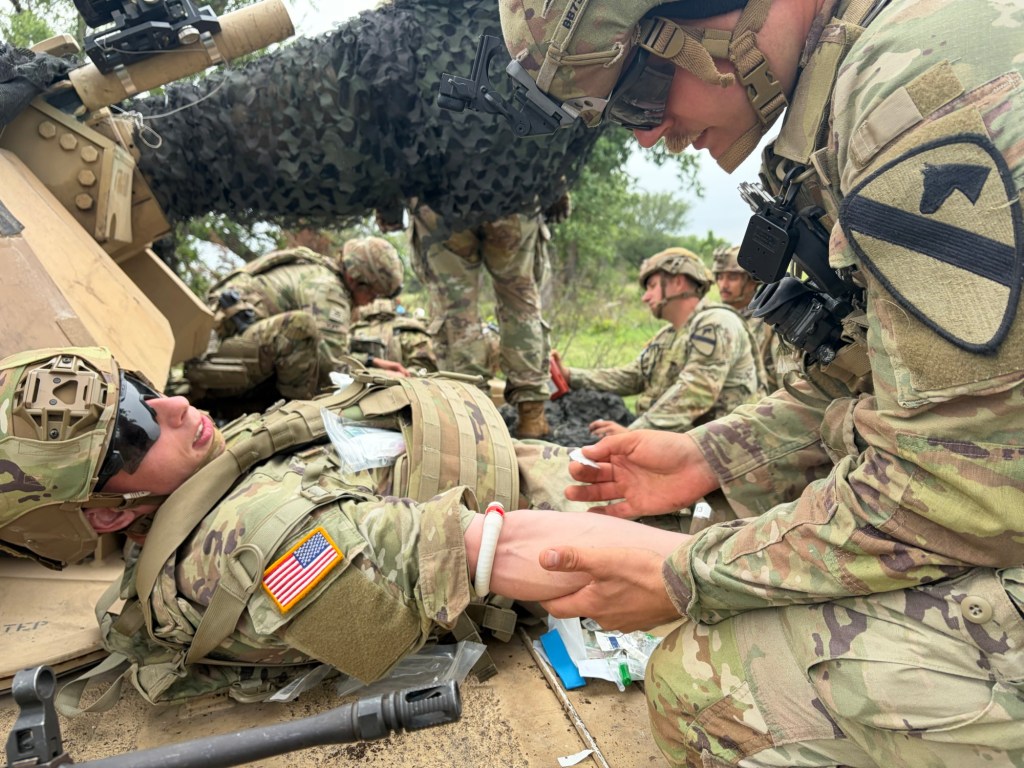
Leadership capital is important, this is where you earn it. It’s hard for the battalion commander to say “No” when your bases are covered and you’re crushing your tasks. Everyone who shows up to your sick call is receiving excellent care. You are doing well at your job, and the MEDO (if you have one), and Platoon Sergeant are checking the boxes. Like any other job, you must be a master of the basics, a team player, a competent staff officer, possess tactical competence, and set the example for others to follow.
Point #4 of 4: Get a Memo Signed
In the case of some installations, Sergeant’s (sometimes ‘Leaders’) Time Training will already be Division-mandated established and protected time. If not, you may have to gain buy-in manually with your Battalion leadership, beginning with simple rapport-building and conversation. This is where we spend that leadership capital you earned.
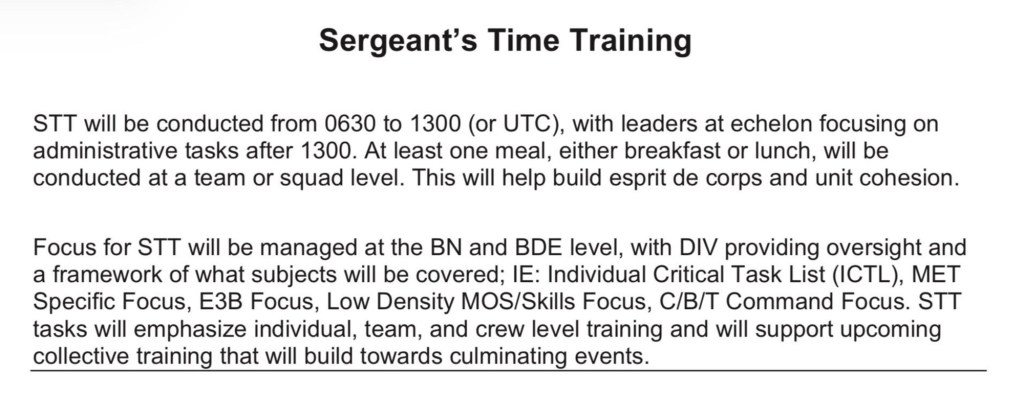
(Excerpt of 1st Cavalry Division Standards, “The Yellow Book” dated 06 May 2025)
After speaking with the battalion commander and battalion command sergeant major, ask permission to draft a memorandum for their review and signature. A signed memorandum gives you command-level backing to protect scheduled medical training when others attempt to cancel it for low-yield tasks that do not directly support readiness, survivability, or mission-essential requirements.
Below are two options that show very different approaches to requesting the support we discussed. As you read, note the difference:
Option 1: “Hey sir, I would like to teach the medics. They really need it and aren’t well trained. Can we do this Thursdays?”
Vague. Easy to say “No” to this. “Just focus on MEDPROS and clinic.”
Compare that to:
Option 2: “Sir, when a Soldier in our battalion is dying, nobody asks how good the motor pool looked. They ask if the medic was trained. Weekly training means fewer preventable deaths, fewer missed diagnoses, and fewer Soldiers lost to accidents, illness, and training injuries, garrison or deployed.
It also directly improves readiness. Better medics support METL tasks, support EFMB/E3B success, improve 68W ICTLs, and keep soldiers in the fight here at sick call. The medical section will still crush all our other goals you expect from us.
Sir, Sergeant Major, would you be amenable to signing a memo stating that medical training will occur every Thursday morning ISO unit METL tasks IAW FM 7-0, AR 220-1, 68W Scope of Practice, ICTLS, and the BN medical training plan. I have cross referenced the training calendar and deconflicted all competing training and tasks prior to developing the medical training plan for the next 90 days.”
Most leaders could only say “no” to a similar prepared pitch out of spite, or personal reasons. If still resistant to medical training, the only thing we can recommend is for CSM, 1SG or Commander to sign a different memorandum you draft saying they were briefed on the current status of medical training, and are informed of, and accept the risk. This protects you in the event there is an investigation that better trained medics could have potentially influenced.
You also don’t NEED a memo, or even BC approval to start weekly training. You could start training now, it’s your schedule. The issue is consistency through protected time, and how frequently it can be cancelled without written support.
Chapter 4 – Make Training Visible
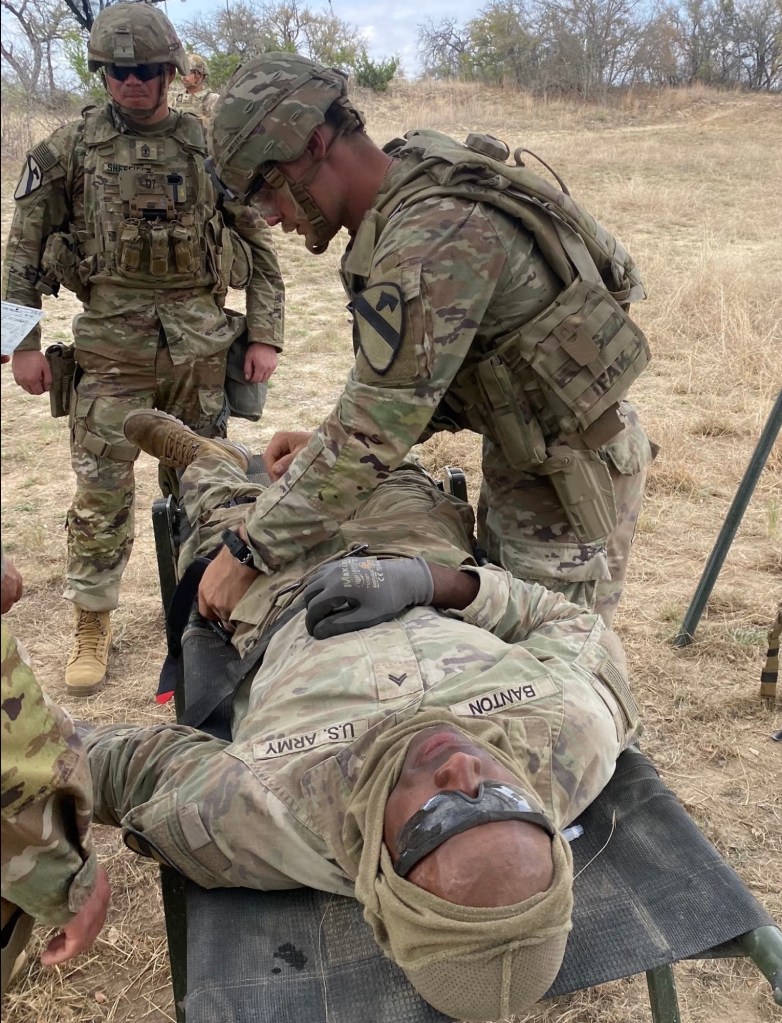
If leadership didn’t see it, it never happened.
We highly recommend you try to conduct this in a physical place where it can be easily seen by leadership, if appropriate to the training. You can even invite leaders out for the higher yield tasks. Once again, ensure this training is on your senior leaders calendar both one and two levels up, to give them the maximum chance to attend.
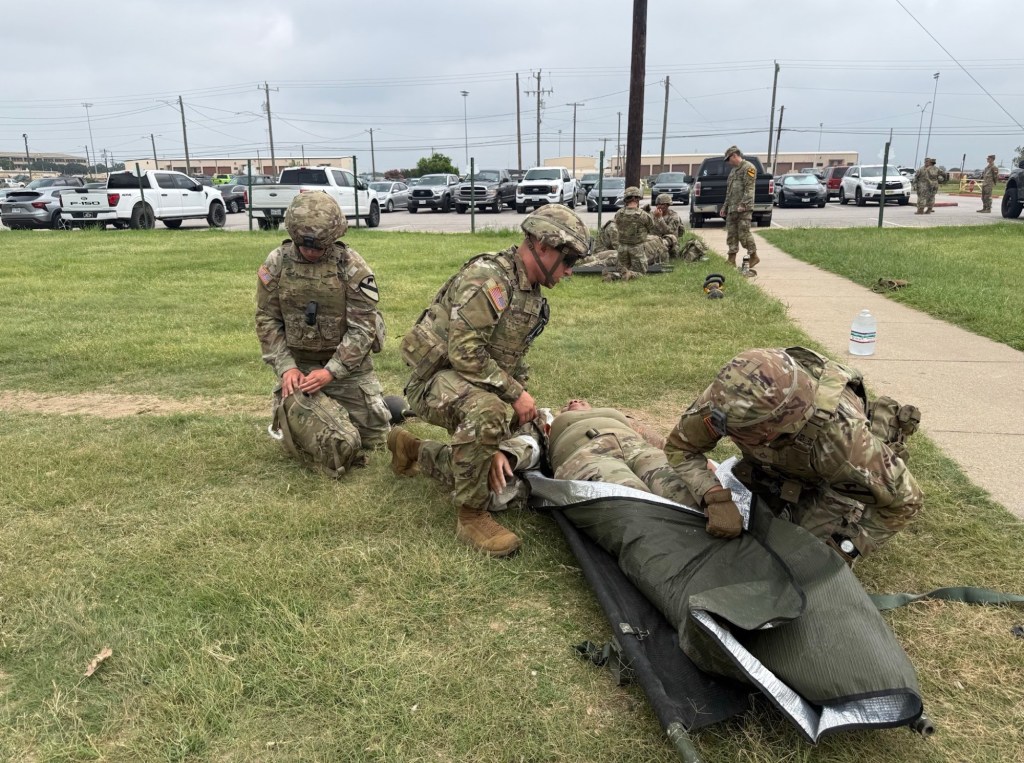
We also recommend following up with the dreaded storyboard, every single week. It’s an easy task for young NCO’s to do, and a PSG/PA to verify. Send them up EVERY single week training is conducted. It gives leadership a reason to look good, and when they look good, they are happier with you and want you to continue. This is the return on investment for spending leadership capital, and enables you to keep training. Your medics can pre-make them if they know the topic, and can drop the photos in so its ready to drop that afternoon, or Friday morning.
Ensure your junior leaders who plan and execute training are also recognized in this storyboard. With your mentorship your junior leaders will develop their research skills, their presentation skills, their professionalism, and be recognized by the command as competent and reliable junior leaders. Your mentorship could eventually include a professional biography for each junior leader and curriculum vitae. This will help them when they attend the promotion board, as the CSM is more likely to remember “SGT Highspeed who planned, prepared, and executed BN CLS” with accompanying pictures, as opposed to SGT Lowspeed who is allegedly ready, according to his sponsor.
Chapter 5 – Find Your Topics
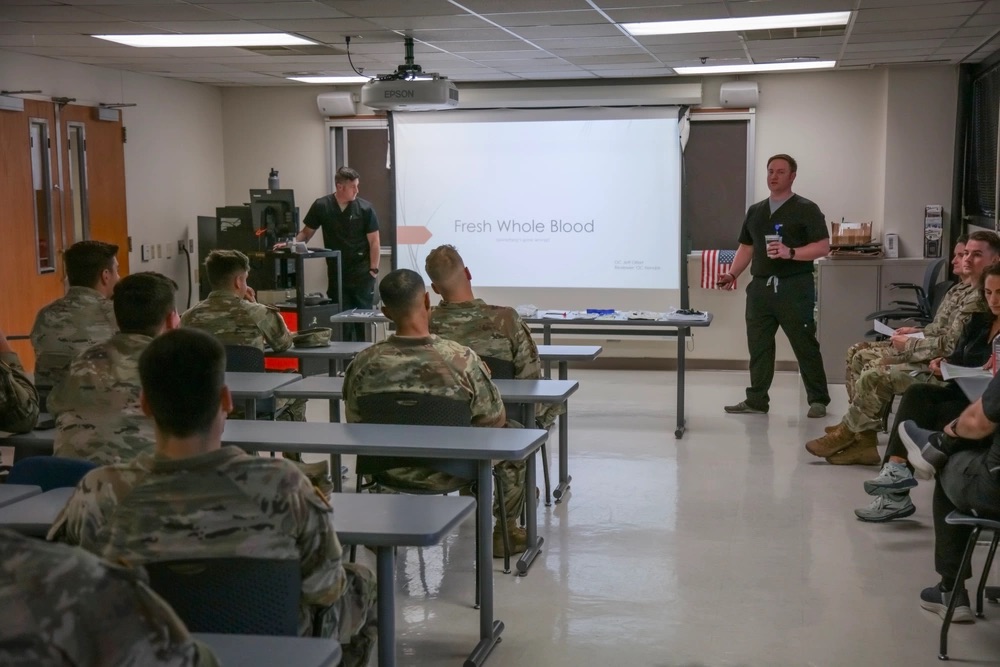
5.1 Analyze and Select Your Initial Instructor Pool
With the volume of required medical tasks and the limited training time available, selecting the right training priorities can feel overwhelming. It is also important to avoid scheduling too many low-engagement (AKA “not as fun”) topics in succession, even when those topics are clinically necessary.
The good news is that the battalion PA does not need to teach every class. However, the PA should attend as many medical training events as possible. If the battalion PA is a former medic, they have a responsibility to reinvest that knowledge into the formation. If the PA was not previously a medic, they should use these training events as an opportunity to learn the tasks alongside the senior medic while also helping reinforce clinical standards and decision-making.
In both cases, the key requirement is consistent PA (as well as MEDO) presence and engagement.
Medics should also be assigned topics to teach to the rest of the section. This develops their medical knowledge, reinforces their clinical competence, and improves their ability to communicate clearly, teach others, and brief leaders under pressure.
5.2 How to Keep Education Current, Relevant, and Engaging
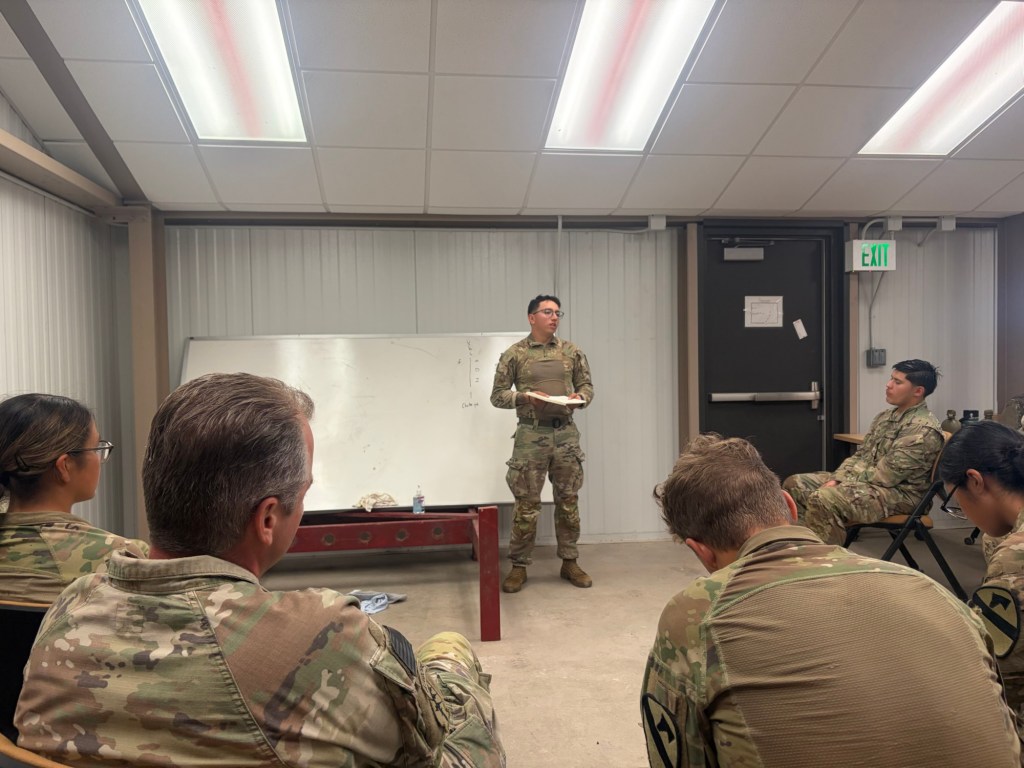
One recommendation to address this is by alternating focus of topics every other class/week. You could also alternate between TCCC and DNBI/Sick Call. You could even do one trauma topic taught by a medic to start the day at 0900-1000 and follow it with a DNBI topic taught by someone else from 1000-1100. Then, everyone is released ONLY after they have done the hands-on task of the day (hopefully related to prior classes.) You can do a lot with 2-3 hours, and even more if you eat together as a team working through lunch.
Here is one example of how that block can go:
0900-0930: Topic #1, Abdominal trauma, taught by PFC Jenkins (68W). PSG and BN PA ask deeper questions to the presenter, and the group, such as on evisceration management.
0930-1000: CPT Johnson (BN PA) teaches non-trauma abdominal exams, HPI and red flags.
1000-1030: Medics pair up and practice.
1030-1100: CPT Johnson sits on table and pretends to be a patient presenting to sick call for stomach pain for ~20 minutes. Do a 10 minute debrief of what they missed or could do better. Consider how a different answer to HPI questions could lead to differential diagnoses.
1100-1145: SSG Smith teaches hands-on class. Can be related, or not. This ensures days that are primarily PowerPoint or mental still get some hands-on practice. They are released after 2-5 reps. This ensures they don’t just do one thing and go home. We recommend using a checklist for procedures so one medic watches/ “grades” while another performs. This ensures they aren’t just randomly practicing, but keeping the steps consistent. A PA cant watch every single repetition for multiple lanes, but a checklist can help.
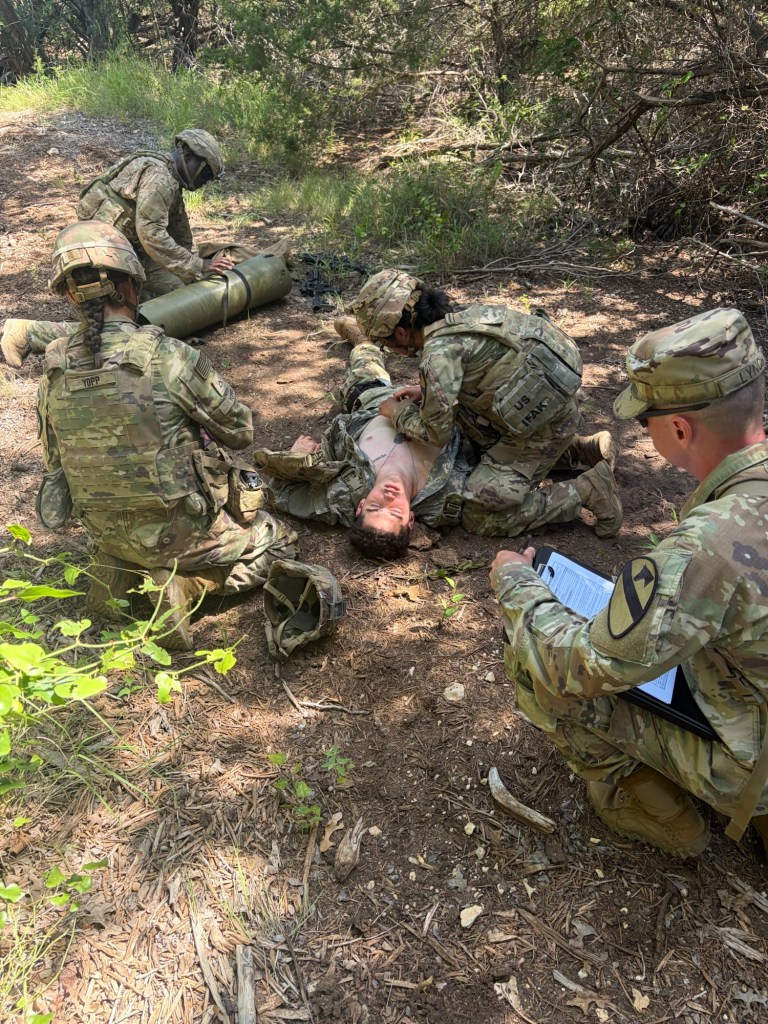
The focus of this protected time should be primarily medicine. While some may occasionally choose non-medical soldier tasks, this can quickly turn into administrative tasks (administrative tasks are not bad! They reinforce the importance of compliance and documentation in medicine. However, administrative tasks should be part of every patient encounter, logistics class (medical supply, medical device, medical maintenance, and credential currency) , or an online mandatory training hour. Those are never emergencies and can be deferred until the afternoon or next day, after medical training ideally when motorpool tasks need to be completed.
Remember: Have your training plan designed in anticipation of the command’s approval. Don’t wait until approval to design the training plan. If you build an appetizing one ahead of time, it will strengthen your argument when pitching the idea to leadership.
Below are some recommendations to help you brainstorm your first few months of training and education. Note: there is nothing wrong with repeating higher yield sections to ensure higher standards. As experienced medics mature within the formation, they become force multipliers who transmit standards, mentor junior medics, and help institutionalize a culture of sustained clinical proficiency. They will carry those lessons forward for the rest of their career, as well.
TCCC / Trauma Training Examples:
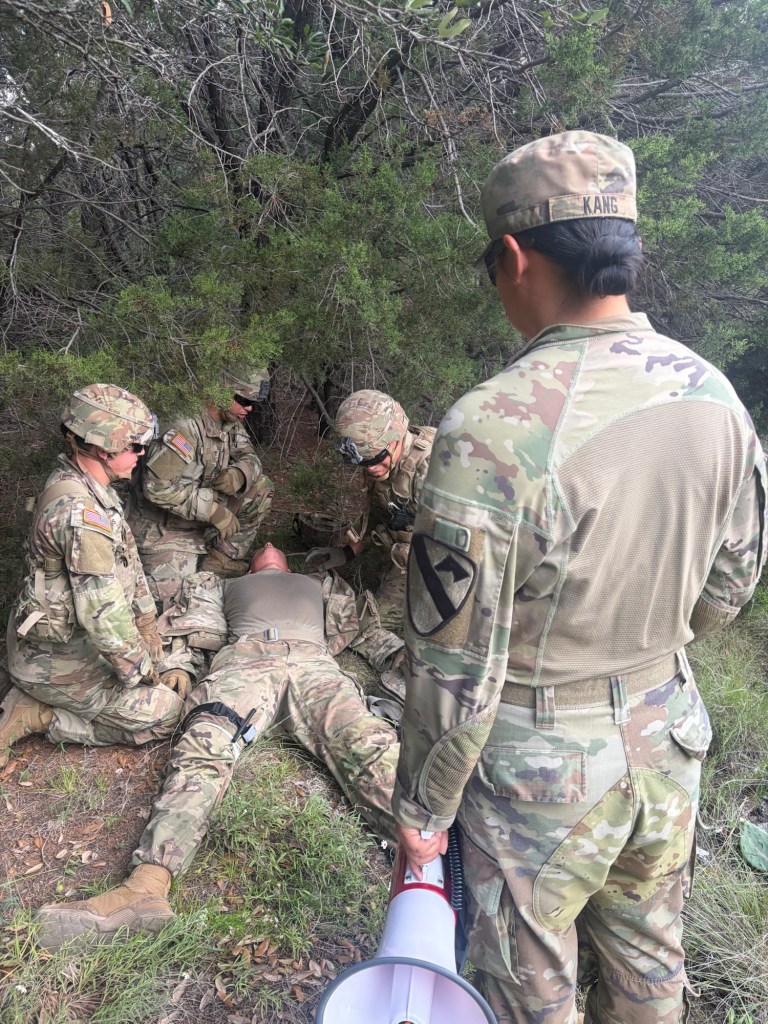
Below are some ideas for TCCC and related trauma training. You can also just open Deployed Medicine app to the 2026 guidelines and it won’t take you long to reach an intervention or decision that you haven’t touched on in months. It helps to talk through some pearls before having hands on training. You can even do this through Socratic questioning. If the topic is not as “hands on”, an unrelated skill can be practiced after the lesson. (Don’t just let them do 1 rep of a skill to be exposed, make them do multiple reps to do it very well.)
Topics:
- Tourniquet drills (self arm, self leg, buddy leg)
- Get the stopwatch out! Slowest time does 5 pushups. After a few rounds, fastest medic can get stand and watch, while the remaining medics go again until the very last two are left. (This is referred to as “it pays to be a winner” during training, and allows competition and bragging rights for any task.)
- Off the “x” drills
- Like TQ drills, but include CUF, or the beginning of a TCCC scenario. They can call out to a patient, sprint out to them, apply a TQ while low or prone, carry a patient back to cover, all while being timed. You can probably get medics doing this under ~60 seconds instead of under 2-3 minutes, depending on distance.
- These are basic and “not sexy” but arguably one of the most important parts of TCCC.
- This will help individuals prioritize fitness, especially if multiple reps are done. Fit soldiers may have faster times even over 3-5 reps, which shows not only speed but recovery.
- Junctional Wounds
Don’t neglect junctionals. Everyone makes scenarios with tourniquets, but often times neck, axillary and femoral wounds are left out or not as frequent
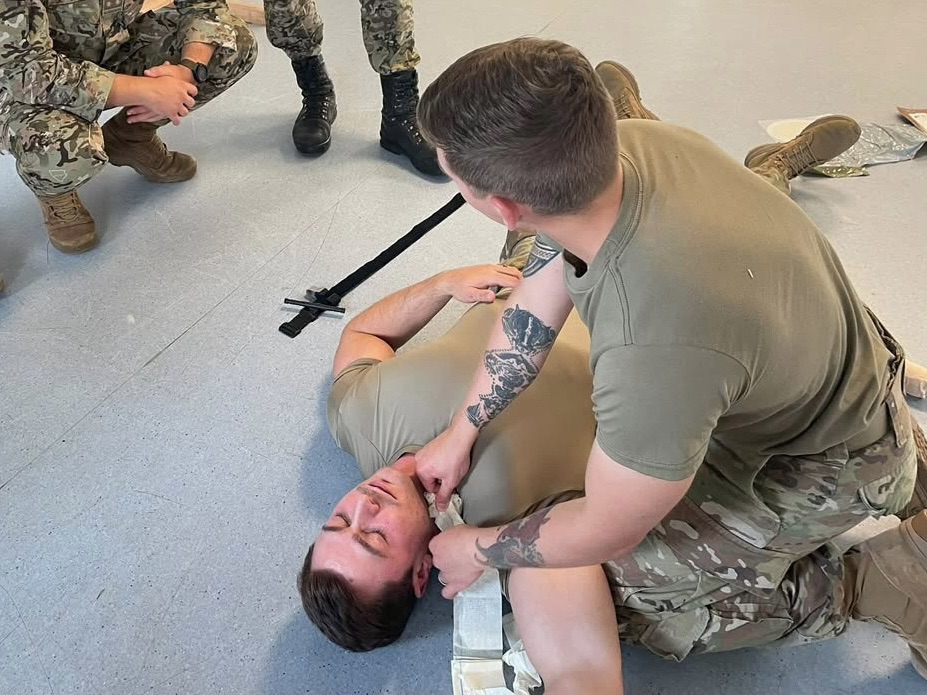
- For junctional proximal pressure, Consider a pulse ox on fingers or toes to see if your medics can use their hands to stop femoral, branchial, and subclavian artery. After that, have them practice the same using any junctional tourniquets they carry, improvised or commercial.
- You can also try to see how hard it is to slow abdominal bleeding with an abdominal tourniquet, two hands, or a knee.
- If femoral junctional is too painful, it is probably too medial and not over artery.
- Also, try to practice packing wounds and wrapping, depending on wound packing trainers available.
- If femoral junctional is too painful, it is probably too medial and not over artery.
- You can also try to see how hard it is to slow abdominal bleeding with an abdominal tourniquet, two hands, or a knee.
- Airway classes (Especially crics)
- We have an entire article on crics, with a video to share. They should be able to rotate through and find the cricothyroid membrane on every other medic in the room, especially on a female neck which can be more difficult.
- Face Mask Seal with BVM seems simple but is particularly complex. Get enough masks for them to practice on each other.
- I-Gel’s are not in TCCC, but could be considered for DNBI’s while deployed. However, they will also need to learn to medicate a patient to tolerate one.
- Blood Transfusions & Whole Blood
- If they haven’t done an autologous blood transfusion, acquire some kits. You can also buy just the citrate bags and y-tubing for cheaper reps than $120 tactical kits.
- TCCC Trauma Lanes:
- One of the many end states should culminate in full TCCC trauma lanes. However, not every training event needs to be a fully resourced lane. Some weeks can focus on “shadowboxing” a complete trauma lane with medics practicing on one another, running through the full MARCH PAWS sequence multiple times.
This may initially draw eye rolls, but the purpose is critical: repetition builds automaticity. Great medics should be able to assess a “slick” patient and move through MARCH PAWS without hesitation, prolonged pauses, verbal uncertainty, or missed interventions. When a medic lacks automaticity, they are forced to stop and consciously think through each step. Under stress, that delay can lead to missed injuries, delayed treatment, and preventable deterioration. Another way to look at this, is if they were teaching someone to go through MARCH PAWS and they had to pause as they tried to remember, how would that be perceived by those they were teaching?
The goal is to develop medics who can execute the fundamentals smoothly, consistently, and under pressure before they are placed into complex, resource-intensive trauma scenarios.
- One of the many end states should culminate in full TCCC trauma lanes. However, not every training event needs to be a fully resourced lane. Some weeks can focus on “shadowboxing” a complete trauma lane with medics practicing on one another, running through the full MARCH PAWS sequence multiple times.
- How to treat a TBI with an aid bag
- IV Classes:
We recommend IV Classes every 1-2 months, especially if your guys aren’t getting many sticks in clinic/platoon. Finish your Thursday class with “everyone gets 2x sticks with confirmation you are in, then you are released.”
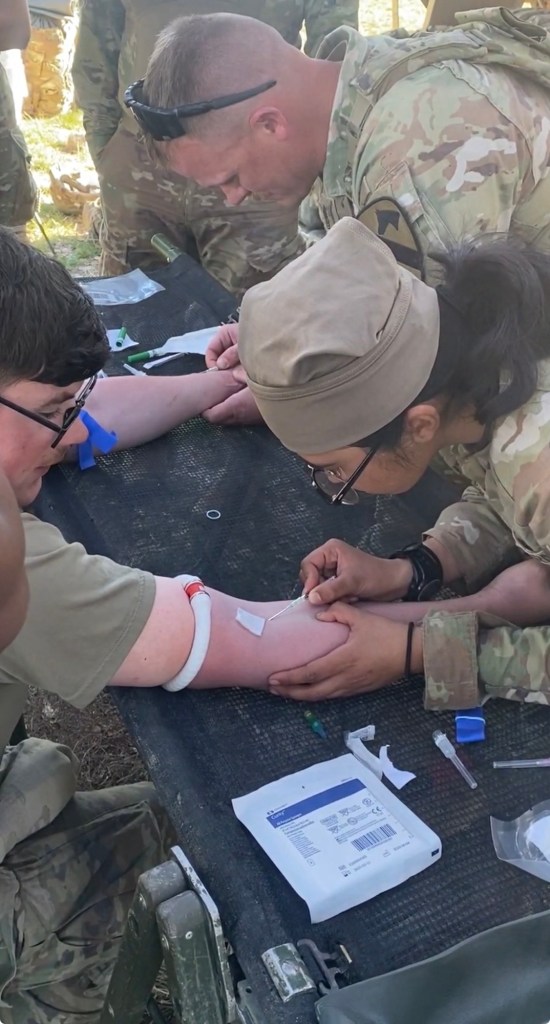
- Why IV’s?
- Even if they stick often, this is a great chance to push their limits.
- Premade IV kits are expensive, use a box of 18G or 20G IV catheters, plus some saline locks instead, or make your own kits.
- Consider “AC” sticks off limits once they are good; try forearm, back of forearm by elbow, wrist, hand, and biceps, especially if you get 20G or 22G.
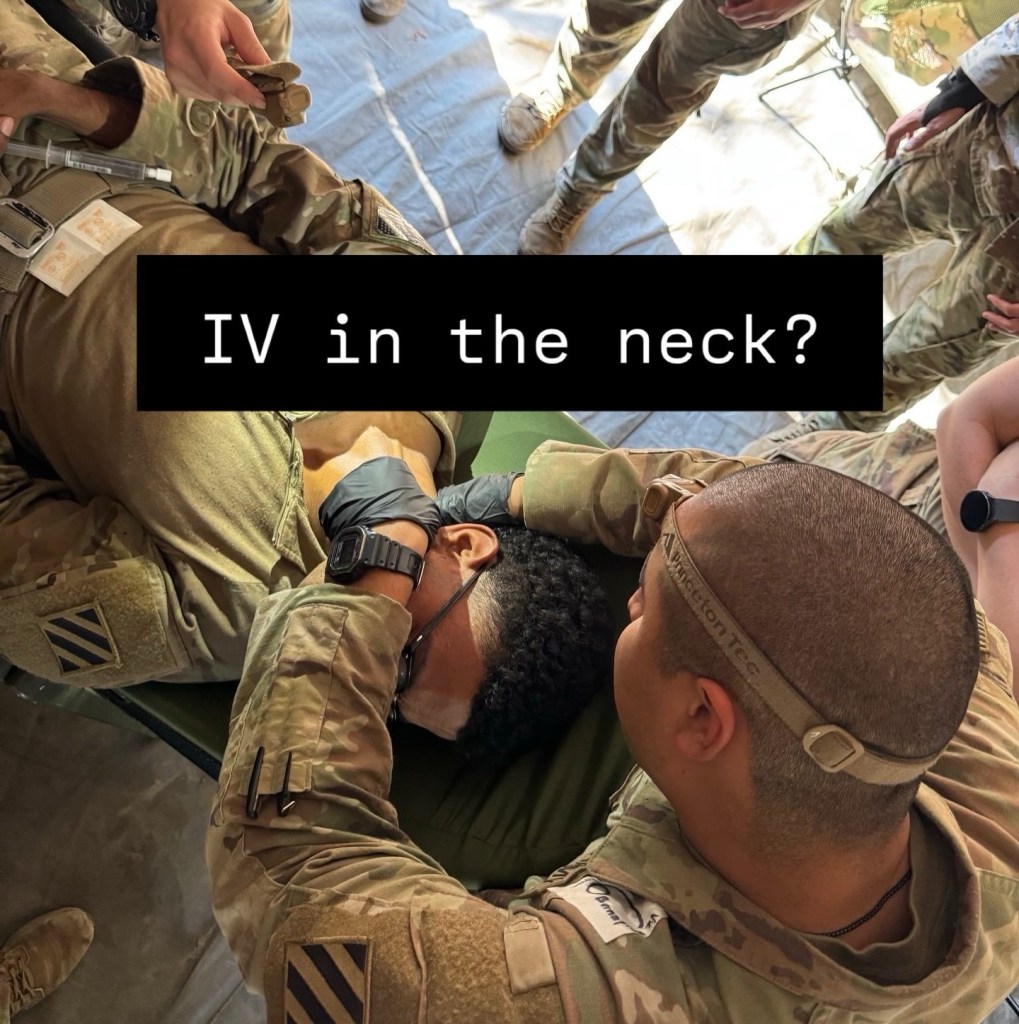
- An E-4 or E-5 who are stellar at IVs outside of the AC, and are doing them often can eventually be trained on External Jugular (EJ) veins ONLY when PA or senior NCO are currently watching them. Reinforce this is NOT to be practiced in the barracks due to very rare, but possible risks.
- We like using stopwatches for IV or other task competition. However, competency is more important first. A medic must be GREAT before they can be fast, otherwise they will be sloppy.
- Even if they stick often, this is a great chance to push their limits.
- Pharmaceutical Calculations
- This can be done for free, for the cost of existing projectors, computers or just paper/pencils.
- You can come up with 10+ scenarios where they must decide what dose, and how many mLs they must use to solve the scenario. “I would give xxmg of this med, which is 2mL.”
- If you have the resources, you could make them draw it up using saline vials labeled with fake labels. Some medics may get the math right, but physically draw up multiple times the dose. They must learn to do both right, every single time.
- Ketamine , Esketamine and analgesia
- Bonus if you have videos on youtube of patients on Ketamine.
- Can do med math scenarios as above. When they should give a little, give more, give a lot.
- Include side effects
- Can do other TCCC medications
- Needle decompression vs Finger Thoracostomy
- Grab a permanent marker. They partner up. Ask them to put an “x” where a needle goes, and a line where they would put a finger thor or chest tube. You may see many medial to the nipple, or inferior to it, which could hit the liver and cause internal bleeding.
- Only after identifying landmarks on real humans should the chest trainers come out
- Non-compressible torso hemorrhage / abdominal wounds
- Burn management and calculation
- Splinting
- Wound care / irrigation
- Antibiotics
- Eye Injuries & “Vital signs of the eye”
- Sick call meds in the dismounted aid bag.
- Bring their medication kit to class! See how many don’t have labeled expiration dates or carry medications they don’t know side effects of, etc.
- Vehicle Collision and Rollover scenarios: Not all trauma is combat. A common cause of injury and even death are vehicle related incidents. I would try to include those into trauma scenarios after TCCC is mastered as they aren’t always just applying a tourniquet, and there may be multiple patients.
- CPG Familiarization: Pick a JTS CPG and go through it line by line. Socratically ask them what they think the next section will say before revealed.
- This is a good way to teach them how to look at CPGs themselves.
- TCCC during PT. Harder for PA to attend due to running sick call, but great for medics not running sick call. Also enables more training during busy weeks.
- Must use two straps if carrying real patient, or use 150-200lbs+ of heavy equipment.
- Prolonged Casualty Care classes (after TCCC is excellent)
- Ultrasound (EFAST + Ultrasound guided IV’s)
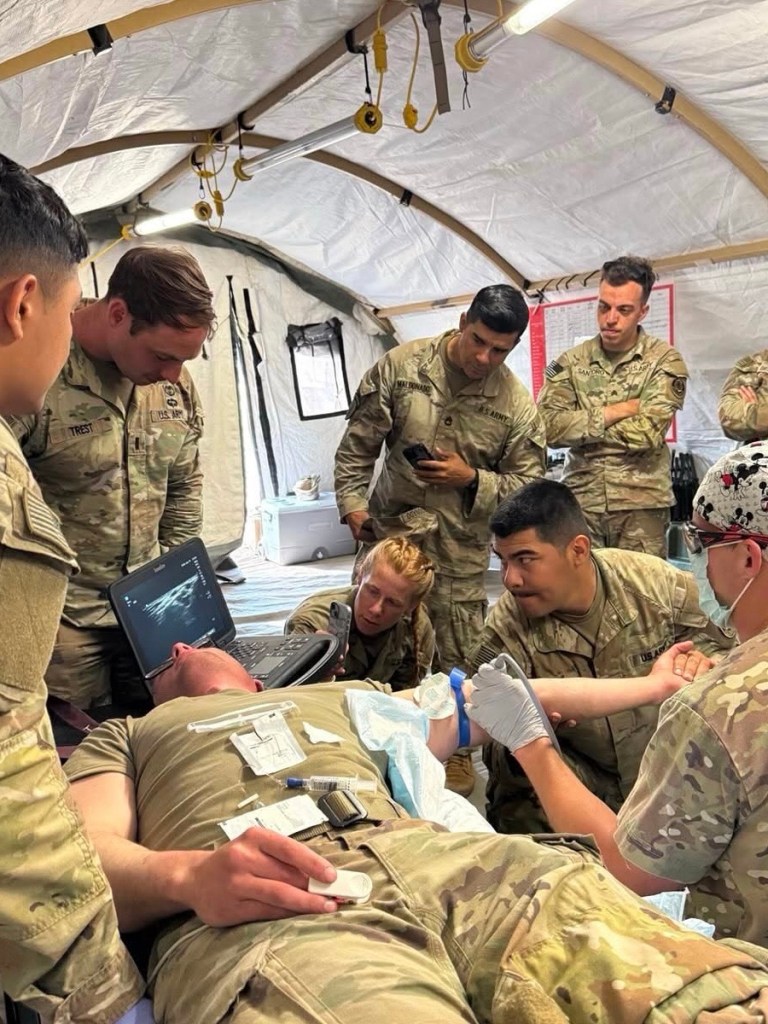
- Flight Medic Classes: Get local Flight Medics to teach a class and maybe get medics a ride.
- K-9 / Military Working Dog: Only recommended if actually deploying with dogs. Otherwise incredibly rare and low yield, but could be a “fun” training day once basics are covered as you need to know TCCC well in order to know additional anatomy.
- Pediatric trauma
- Bring in a Doctor or Paramedic with lots of pediatric specific trauma experience.
- Try to get hands-on skills
- Your team will likely encounter pediatric patients during deployment! Don’t let the first time wondering how to get an airway or I.V. be outside of training.
- EFMB related topics, tasks and CPGs
- Message us with more ideas!
Non-trauma / DNBI ideas
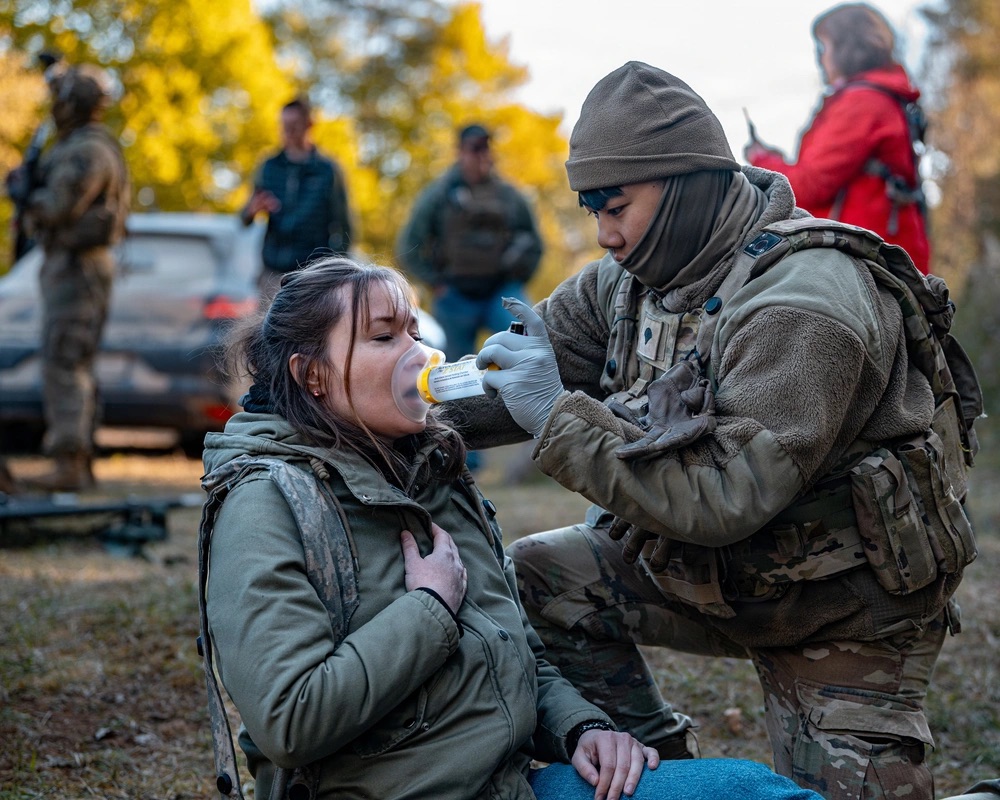
Now is the chance to make them “mini-PA’s”, refine issues you see at sick call and make your BN safer while making your job easier. The quicker payoff is less soldiers taken off the line/FTX for minor issues. This also helps because when a medic does recognize a true red flag, it’s taken more seriously because their competency is more established than the untrained line medic evacuating every minor cough or stomach pain since their PA does not train them.
- We wrote an entire guide on improving sick call. One class could on the process and how you want it to roll, and the next one could be a class on the common medications, side effects, and contraindications/red flags.
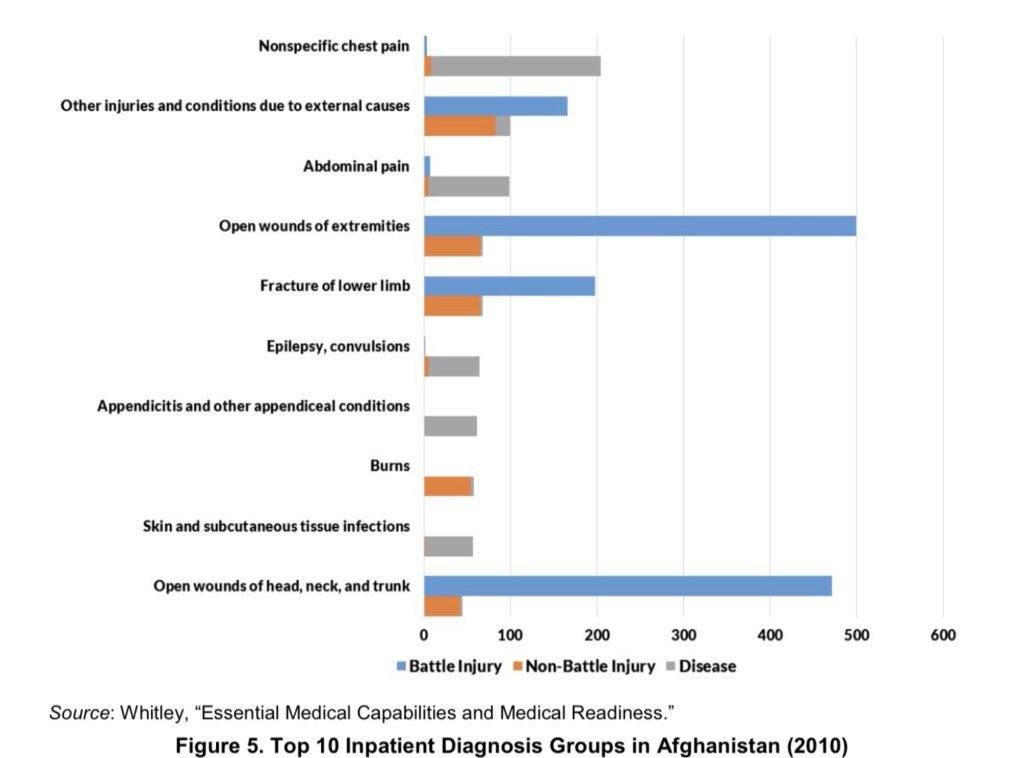
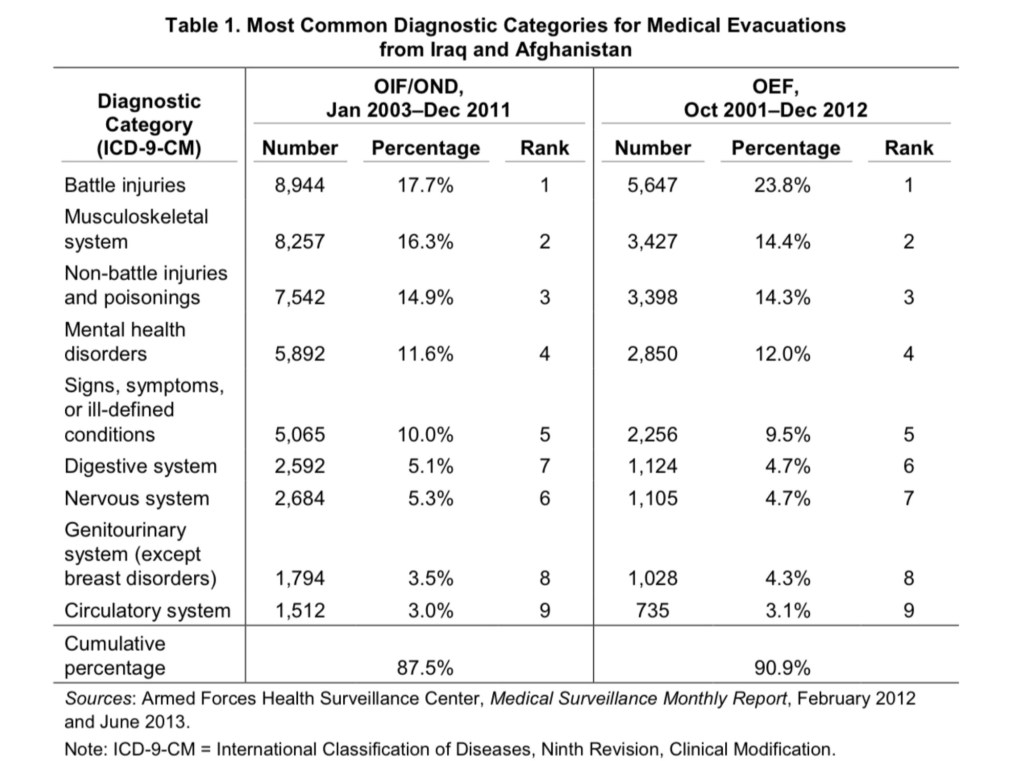
- When it comes to which DNBI’s to learn first, I like to think of what data shows what are common issues in wars that send soldiers back
- “Among all of the medical evacuations from the two theaters, only 18 percent of those from Iraq and 24 percent of those from Afghanistan were for battle injuries. The next three largest diagnosis categories (each accounting for at least 12 percent of medical evacuations from om both theaters and collectively more than 40 percent) were musculoskeletal disorders (mostly of the back or knee), non-battle injuries (mostly sprains and fractures of the extremities ), and mental health disorders (the most frequent conditions being adjustment reactions, mood disorders, anxiety disorders, and post-traumatic stress disorder).”
Source:
– Population Health during Combat Operations, Oct 2017
Keep in mind, just because these are some common reasons we evacuate, doesn’t mean that smaller things like URI’s aren’t common small wins for medics to know, as well. For that reason, what is commonly seen in sick call can be ideas, as well.
- Heat exhaustion vs Heat stroke (Use Heat Injury Guidelines)
- Real fatal issue that kills soldiers every year; medics can recognize and save lives!
- Teach the difference between just ice sheets and adding a tarp to do TACO, or even immersion… with hands on experience.
- Teach them that heat stroke can present with sweating. Use AMS + Temp.
- Dental class
- Bring in a dentist AND supplies for them to practice IRM kits, and even local blocks on each other.
- SOF medics/PA’s can also learn tooth extraction
- Dermatology
- Bring in local on-base dermatologist for class on steroids, antifungals and common issues, or teach it yourself.
- Ottawa ankle and knee rules
- Every medic should know these!
- Lower Back Pain
- One of the top causes for evacuation, and frequent garrison complaint.
- Medics should be pro’s at managing these, have red flags memorized, and help patient with lifestyle modification. (Less time PA needs to be in room with patient for sick call, too)
- Have H2F give occasional MSK classes to medics. Special exams, treatments and common issues. Just 5-7 sessions later and you have medics better prepared for sick call, to help run profile PT, etc.
- Musculoskeletal exam and management might be one of the highest yield things they can get great at.
- E3 Rehab has phenomenal videos on diagnosing and treating many musculoskeletal issues. You could easily start a medic class with 1-2 of those. (They also work amazing for patient handouts and education.)
- Headaches
- Red flags, Tx, etc
- Nosebleed management
- Anaphylaxis vs Allergies
- Approach to abdominal pain, nausea
- Eye injuries, illnesses and complaints
- HEENT exam + common complaints
- Ultrasound (besides trauma / EFAST)
- US guided IV’s are a great skill, although may need longer needles. They will likely need 10+ reps of this to feel good, so it will need to be a frequent
- US may help identify abscess before cutting in.
- MEDOs can teach the broad concepts within the Army Health System: evacuation from POI to Role 4, building a Medical Concept of Support, Medical Common Operating Picture, 10 Medical Functions, and 6 Core Principles of the AHS.
- Behavioral Health emergencies
- Common cause of evacuations during deployments
- Seizure management & Benzodiazepines
- Concussion Management
- (TBI’s that do NOT get evacuated)
- Teach them MACE 2.0 and T-MACE, and a 60 second neuro exam
- They don’t need to do in-depth two-point discrimination for five minutes on a jump injury
- Shoulder dislocation management & reduction techniques.
- Feet care after rucks, field/patrols, trenches, etc
- Blisters, etc
- Splinting classes.
- Be strict! Most medics can apply a splint or sling… but they tend to be very loose and allow lots of movement. “Patient” should feel very secure and it should not be easy to create significant movement.
- Walk around room and try to move the affected joint. Then have them make it better, so them and the “patient” can feel the difference.
- Preventative Medicine / Field Sanitation
- Boring… but can save more lives on deployment than TCCC. So get great at it. Maybe create some scenarios to get buy in.
- Tropical Medicine / Infectious Disease
- Malaria and similar diseases they will see on deployment. This is great when you know where you are going on deployment because you can tailor it to the area. They can’t diagnose what they don’t know about.
- Altitude / AMS / HACE / HAPE (Depending on deployment possibilities)
- Cold Weather Injuries (Depending on the season)
- Anything you saw at sick call from the past month that their exams or HPI lacked.
- Anything YOU as a PA want to learn about that medics may also find useful. Nerd out about heartburn for your own sake, then bring that energy to your medics.
- Message us with more ideas to add!
Chapter 6. Persistence:
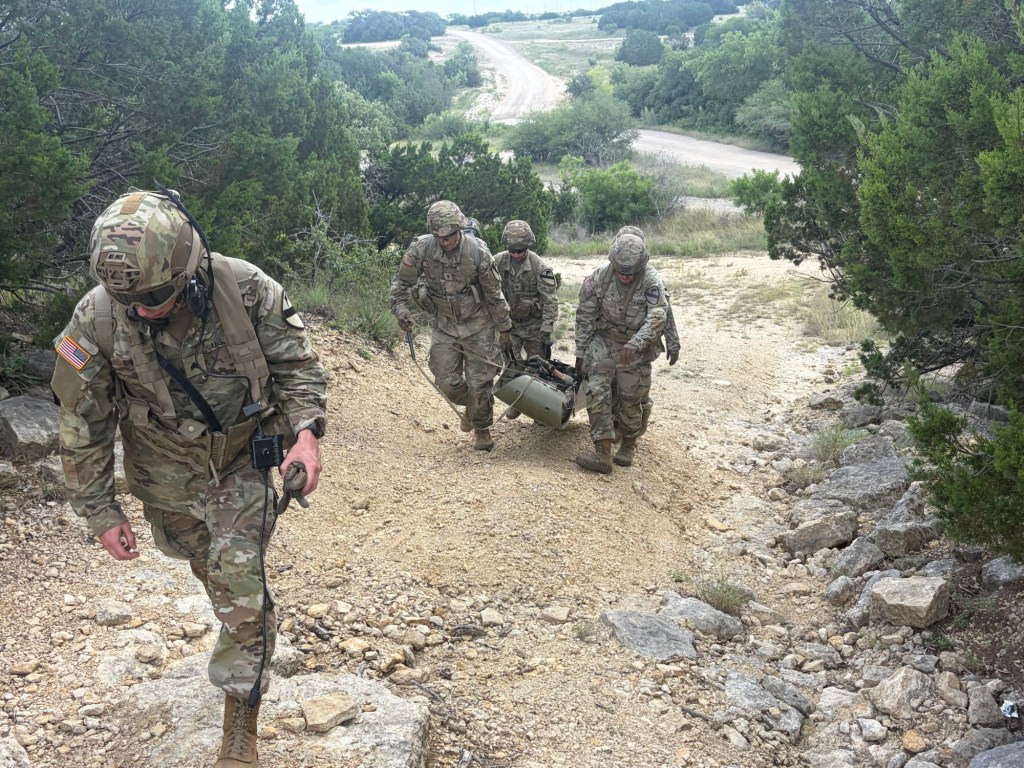
This will be tough to set up. You are tired and have a lot of jobs to do in addition to this, we see you.
If you have accommodating leadership, a great MEDO (if you even have one), a stellar PSG and PA then it can be easier. Any other combo may be an obstacle. Our medics and patients are worth it.
This is very much doable. There will be weeks when despite all your planning, a last minute event the evening prior cancels everything. Stay persistent and flexible. Do not get discouraged.
There will be times where you have to stand up and say “No, we can not support that.” That is where the memo comes in. That is difficult as a young LT/CPT. We need you to think of your future patients and not roll over every single time you’re tasked out. There is some give and take, and times you have to give in, but there needs to be rare exceptions and not a common occurrence. Otherwise there are cultural issues and you need to reengage about your agreement.
Just like point #3 above, the better you take care of your BN outside training time, the more they (should) respect you during training time.
This is worth it to have great medics, who will go on to do great things.
Chapter 7. Pearls & Pitfalls:

This section is meant to be an evolving work to help guide you on what may help or hinder your weekly training. If you have solutions, send them in.
- Understand that attendance may fluctuate. It is important to conduct training no matter who arrives. if there are 15 medics, or only 5.
- If high yield, push that topic to next week and teach the few who showed up something else. Two medics showed up? Those medics are about to be excellent, get lots of reps and are teaching the class next Thursday to all 15 present.
- It’s protected time. Never EVER cancel.
- The following week can include a brief 1-2 minute overview of the prior week. For spaced repetition.
- Not all medics will be equally motivated. Some joined for school or other reasons. Don’t let this discourage you when teaching classes. Alll chose to sign a contract to do a job, and so they should learn it. Training is not optional. Learning high attention to detail and effort now will pay off regardless of what they do in the future, medical or not.
- The more often you train, the more some may start to lean into it and surprise you. This is also why we mention competition and hands-on tasks. A medic may be sleepy through a class you give, but they won’t like missing IVs in front of their peers, or being the slowest in the group at a task.
- Don’t feel obligated to make a powerpoint: You are already busy. A PA or senior medic should be able to run circles around a medic on many medical and trauma tasks, especially with a quick review prior. A simple whiteboard works wonders. Or, sit up on a counter and pretend to be a soldier at sick call. Lets see if your youngest private can do a good exam and recommend good treatment while missing no red flags. He can “phone a friend” in the audience if he gets stuck. That kind of training is really formative for young medics since it puts them on the spot for active learning.
- Assign prereading occasionally. An article, website, youtube video(s) or guideline. It teaches them to be self starters, and you can see who puts the work in.
- (We have found a cycle of medics who are taught more often also seek out even more knowledge.)
- You should have a medical signal chat for your BN: This enables quick messages to educate your medics throughout the week. It also helps with reminders of the training for attendance.
- “Reminder class tomorrow at 10. Bring your aid bags and IV kits. Read through the following article.”
- You can even have a group for senior medical leadership in BN/BDE or above, to help identify more opportunities for training and sharing resources.
- “I have a last minute slot for a training opportunity.”
- “Can anyone acquire a blood transfusion kit for training tomorrow?”
- Set message permissions to “Admin only” to avoid GIFs and jokes blowing up chat. Members can message Admins directly for dissemination of information.
- Ensure adding members is “Admin only” otherwise randoms get added.
- This is where I send scenarios, teach critical thinking, recognition of conditions like alcohol withdrawal or CAP, and other information such as my drug list for line medics to run sickcall during training.
- Invite other units medics!
- Once you have established a good rhythm, feel free to support more medics if you have the supplies on certain days. You may end up with other BN, BDE’s or even other branches attending.
- TCCC training can get expensive; Be Frugal
- We recommend inventorying used supplies and keeping them in a training box to ensure they don’t accidentally go home in cargo pockets or thrown away. If something breaks, no big deal, but it should be used until it does. Make sure after training that everything goes back in the box.
- Avoid buying premade kits for IVs, crics, chest tubes, or similar. It’s far cheaper to buy contents and make your own for dozens of training reps AND to stock aid bags.
- $50-$100 per kit vs $5-$10 make-your-own depending on what it is.
- Chest seals are a ridiculously easy, low yield skill. For $15+, we should not tear through them to spend hundreds of dlars. Either use improvised with moleskin, make your own or reuse the commercial ones dozens of times.
- Contingency Instructors:
- The PA got hurt on a jump, or the senior medic had to go away for leave/TDY. Now who is the instructor for the next few classes? Assign backup instructors and topics.
- Systems are fragile when they rely on one individual. Setting up backup plans helps avoid training being cancelled or filled with last minute low yield hip-pocket training.
For example:- Primary: Class A taught by PA “K”
- Alternate Instructor: SSG “J”
- Contingency: Alternate topic taught by SGT “B”
- Emergency: Hip-Pocket training + Hands-on by SGT “T”
“This article is great and all, but what about us part-timers?” (Compo 2/3 Pearls and Pitfalls)
The National Guard (and Reserves to an extent) have the unique challenge of trying to fit a year’s worth of training into scattered drills/ battle assemblies with the culminating event being Annual Training. Add the fact that not every 68W in the NG/ USAR work in the medical field civilian side, and the barriers to training are stacked against medical platoon leadership.
Commander buy-in is still paramount to greenlight training. The methods of aligning medical tasks with unit METL don’t change because we are training a part-time force. What does the Commander hope to accomplish by the end of Annual Training? Once the BN PA/PL/PSG understand the intent by fiscal year’s end, they now must backwards plan their training calendar. An example of this could be:
Annual Training FY27: HHC medical platoon will complete and submit T&EOs for all squad level tasks to align with unit METL. Tasks include: 08-SQD-0316 Conduct Medical Treatment, 08-SQD-0319 Conduct Medical Evacuation, 08-SEC-0313 Provide Combat Medic Support.
Since squad collective tasks are the goal by end of Annual Training, the PA/PL/PSG now backward plans on what it will take to accomplish the Commander’s intent. Before squad/ section tasks can be completed there needs to be individual validation on things like DNBI, CCA, driver’s training, and soldier tasks. For example:
October Drill- Hemcon Refresher/ Hemcon TC3 Lanes
November Drill- Airway & Breathing Refresher/ Airway & Breathing TC3 Lanes
December Drill- Circulation, IVs, Pharmacology/ Associated TC3 Lanes
January Drill- TC3 Lane Validation
February Drill- DNBI Focus
March Drill- Driver’s Training, Comms Training, JBCP Training
April Drill- Treatment Team Drills, Evac Crew Drills, Combat Medic Section drills
May Drill- Annual Training Pack-out
June Annual Training- Squad/Section Tasks
Platoon leadership must consider mandatory events that sometimes cancel out training time. One drill may be dedicated to the unit PHA, so classroom DNBI focused training or IV classes may work better than hemcon refresher and lanes. On the same token, if the unit is doing gunnery and maneuver tables, that may be the drill to lock down driver’s training and get solid PMCS done on all wheeled or track vehicles.
As part-time force, once drill is over everyone scatters to their civilian lives. Leaderhsip must be actively engaged with each other, at least, to coordinate things like land and range, Class 8 for training, narrowing down timelines, and synchronizing ideas. This level of planning takes dedication outside of scheduled drill dates. To go drill to drill with no engagement between and still expect well thought-out training is madness. You may also assign a little pre-reading before drill to maximize upcoming training value, but avoid assigning pre-reading then failing to train once drill arrives.
Outside Entities:
Imagine trying to conduct physical training with the platoon during drill. You go to the local AFT complex and do some body weight movements or maybe go for a run on the open road. Great pt session, right? As you’re leaving, you notice some connexes by the complex and ask about them.
“Oh ya, those have all the equipment inside them to conduct AFT. If you talk to the post gym you can sign out keys for them.”
This is a lot of obstacles with NG/USAR units training, especially medical training. Leadership develops and executes the best possible plan they can based on what they know is attainable. Can leadership develop a yearly training calendar without outside entities? Yes. Would pinging outside entities for further support lend itself to better training? Also, yes.
Case in point- utilize the Medical Simulations Training Center (MSTC) local to you. There are 25 MSTCs Army wide and they are there to facilitate training. Access to high fidelity validation rooms, high fidelity manikins, moulage tools in bulk, and trained instructor/ observer staff can provide phenomenal medical training opportunities. MSTCs must submit monthly utilization reports and, therefore, are welcoming units to coordinate training through them to bolster their numbers.
Local colleges may offer opportunities to train medics as well. Anecdotally speaking, Mississippi State University offers clinics for vet techs and law enforcement in emergency K9 medicine. Reaching out to the school, I was directed to the program administrator who was eager to schedule medics as a part of the course- at no cost. The school gets to shake hands and take some pictures for publicity’s sake and a handful of National Guard medics got practical hands-on K9 training.
Email for NG Training Questions: mslemensky1823@gmail.com
Please comment below or message NGCM if you have done similar and have insight to add. We can continually improve this living document.
If you are a struggling Platoon Sergeant, MEDO, or PA-C wanting to implement this, then reach out to the emails provided at the beginning of the article for guidance.
If you have found this article useful, also reach out using above emails so we can keep track of how many BN’s/Providers we have helped.


Leave a Reply