
This is an article on why training quality matters, but the individuals attitudes and team dynamics can be a magnification or degradation to performance. We hope you remember your own attitude and communication skills, and to help others more than being a friction point.
Over the last twenty years I’ve had the opportunity to train military medics, corpsmen, physicians, PAs, nurses, EMTs and non-medics from all kinds of organizations at all levels… Conventional Infantry, Scouts, special operations of all tiers and branches, civilian organizations, allied and partner forces… The scope of practice differs, the experience levels change, and the missions can be as dramatically different as the operating environments. After watching enough teams train, patterns emerge and become more and more obvious. And no matter how obvious and common sense these things are, they don’t just fix themselves without a little coaching.
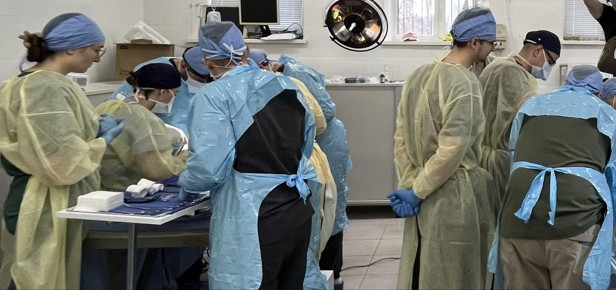
The reason I’m writing this down again, now, is having recently been involved in running three vastly different courses back-to-back-to-back over the last month: Ragged Edge Solutions’ SOF-Austere Medical Technician (SO+AMT), a course for small teams of non-medic SOF soldiers and/or Marines, our Dark+Woods program for mixed teams of NATO SOF Allies, and the Global Response Medicine STORM-2 course, which is a surgical course built for small surgical teams delivered by, with, and through partner nation Role-2 Forward surgical teams. For most of the last fifteen years I’ve focused on small SOF teams, a twelve-person Special Forces detachment with a single medic, or smaller elements of three with no medic at all. A nine-person surgical and resuscitation team is neither of those things. The pipeline that produces a trauma surgeon looks nothing like the one that produces a Green Beret, and the ceiling on medical knowledge and experience in that room is on an entirely different order of magnitude. One of those teams has an actual surgeon in it with a whole staff there to support a dedicated medical mission. Most twelve-man detachments I’ve had the pleasure of serving with or training will never know that kind of luxury.
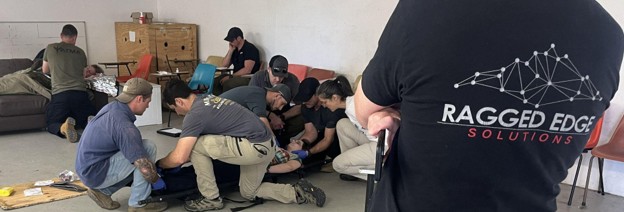
Teams seem to fail in remarkably similar ways. It doesn’t matter if the crisis is a single complex patient who needs a surgeon who isn’t there, or a wave of casualties arriving at a Role 2 faster than nine experts can process them through an OR. Every crisis or incident begins with a mountain of urgent work that must be done. As security concerns and life threats are addressed systematically, the transition to meaningful and efficient interventions must take place. Work ethic and individual talent can only carry a team so far before the work outpaces them. What falters first is not usually simply individual interventions, though some do. It’s everything together, the communication, the prioritizing, the documenting, the delegating of who does what next. The high-achieving brain seems to hit the same ceiling whether it was built through a surgical residency or at a SOF selection and assessment.
That repeated observation is what moved this from an intermittent anecdote to something closer to a finding, though “I noticed a pattern after twenty years of doing this” isn’t exactly a headline, I’ll grant that. Communication, critical thinking, decision-making while stressed, can generally be meaningfully improved in a team over a short period of training. I’ve “known” this, as far as one can know anything, and I’ve adapted the Dark+Woods and PECC curricula to integrating those principles even more after moving on from the SFMS and SOFACC courses. Working more closely with anesthesiologists and surgeons makes the pattern even clearer. Medical gestalt takes years to build through thousands of patient contact hours. What can really be improved in a few short days? A team that learns to talk, prioritize, document, and act in concert will consistently out-produce a team with one or two talented individuals who never learned to function in harmony with the rest. I’ve watched this hold true with a seasoned twelve-man detachment, and I’ve watched it hold with a nine-person surgical team that had never worked together before the week we worked with them. A short, deliberate block of team training, built into repetitive scenarios instead of just bolted onto the front end of them, moves a team further than another day spent deep in the pathophysiology of a single disease process. Watching that principle survive the jump from an ODA or a 3-man team of non-medics, to an austere operating room, is what convinced me it was worth writing down again. If nothing else for myself since I seem to need to learn and relearn the same lessons from time to time.
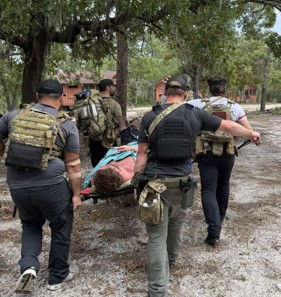
When we first started the prolonged field care working group in 2014, I used to believe prolonged casualty care was primarily a knowledge problem: better airway care, more familiarity with ventilators, more DCR, more ultrasound, deeper pharmacology, more reps on procedures…. We built our scenarios around sepsis, burns, crush injury, traumatic brain injury, and polytrauma, because those are some of the worst case scenarios that seem to cause the most severe complications that separate the first thirty minutes after injury from everything that follows. Of course that stuff all still matters. If you can’t get an IV or IO, you can’t resuscitate. If you don’t know the right fluid and UOP target for each injury/illness, you’ll likely over or under resuscitate. Every course makes it a little clearer that it isn’t the thing our students most need from us. We’ve put out almost 300 podcasts on prolongedfieldcare.org on these deep dives at this point (Dennis is a machine) and there’s no shortage of other relevant content across YouTube and everywhere else. So why do teams still struggle if all this knowledge is so widely available now? Everything I’ve published on prolonged care at prolongedfieldcare.org, in the Prolonged Casualty Care clinical practice guidelines, or in the chapter I contributed to the Borden Institute’s “Prolonged Care” text, tries to go the next step past medical knowledge and espouse a small set of ubiquitous principles instead of an inventory of all possible procedures and diagnoses. Most of our students already know more than they give themselves credit for, even if a bit rusty. What they’re usually doing in our courses is knocking that rust off and polishing the edges. In my view, those principles, applied consistently by a team and not monopolized by a single practitioner, seem to hold superior across almost any etiology once the immediate threats to life are addressed.
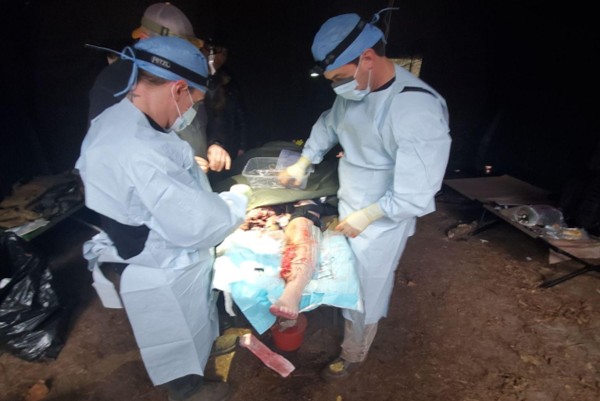
The “kit trickery” and improvisation that I see students come up with are fun to watch develop, but I was gaining far more from watching a team decide something, or fail to, and watching what happened next as the instructors react. Honestly, that is the most fun part about instructing a prolonged care lane… seeing the lightbulb come on from something they did or did not do hours ago. As the courses accumulated the pattern got even more clear. Teams rarely collapse because the medic forgets how to perform a procedure. We’ve all seen that particular medic but it’s not usually fatal to the training. Failure is almost always slower and more complex than that. CoTCCC has made unbelievable strides in proselytizing evidence based combat medicine around the globe to address initial life threats. The first hour is getting so much better, hemorrhage gets controlled, the airway gets addressed, and blood starts flowing. Everyone has a job, and even if the execution is imperfect there’s a shared sense of urgency. Then the unfinished tasks start piling up, and so does the backlog of decisions. Nothing dramatic happens at first. The patient is still sick. The medic is still acting. Nobody’s forgotten how to “do medicine.” The team has simply been task-saturated, and it comes apart at the seams while everyone involved keeps believing they have it under control, or hides the panic, for as long as they can.
Documentation is usually the first casualty, because there’s always something more urgent that needs done in the moment. Something interrupts the medic mid-thought. Drugs run out quicker than anyone noticed. Someone asks when the last vitals were taken and no one’s really sure. Someone else asks whether the antibiotics or the TXA have already been given, and everyone assumes someone else knows, or they’re too task-saturated to care. I’ve watched sequences similar to this more times than I can count. Doses of pain medication get missed, or even duplicated.
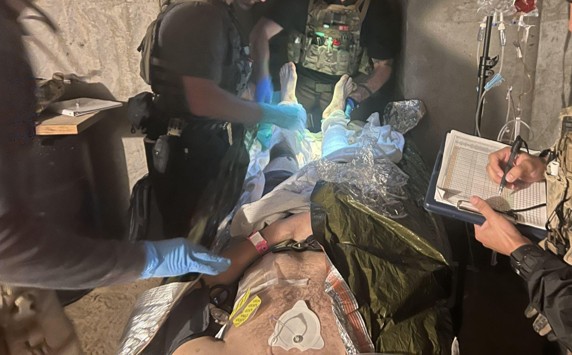
I used to treat these as individual failures. Maybe the medic needed more instruction. Maybe the recorder needed more reps. Maybe the non-medics weren’t used enough, or we just needed another lecture, another checklist, on the theory that the military has never met a problem it couldn’t solve with one more checklist. Looking back at hundreds of these exercises, each after a few days of lectures, we were getting lost in the medicine ourselves, glossing over behavioral patterns and the team dynamics that we had but a few slides for. We kept looking at how we could make a smarter medic when we should’ve been asking how to build a better team, with a medical crisis as the impetus.
Medicine matters, and it always will. What I mean is narrower than that. Don’t become so consumed by the problem directly in front of you, or the deep pathophysiology of one specific problem, that you lose track of everything around it. Don’t get so absorbed in perfection that you forget to check whether the patient’s actually improving, or spend twenty minutes debating the ideal analgesic and dose while no one notices the blood pressure slipping. Stay zoomed in too long on a single procedure or problem and you stop reassessing, stop communicating, stop documenting, stop asking whether the plan that you made is still the right priority.
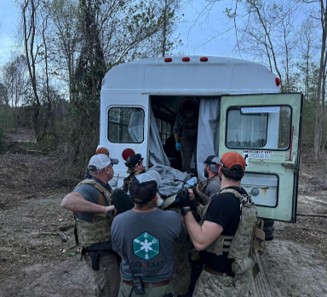
I’ve watched technically excellent medics lose control of a situation because the surrounding chaos overwhelmed them with their teammates helpless or ineffective. I’ve also watched thoroughly average medics succeed consistently because they never lost site of the bigger picture. As Dr. Doug Powell has put it for more than a decade:
“Stable or unstable? Sick or not sick? Getting better, worse, or staying the same?”
Three simple questions. The teams that held onto that discipline kept anticipating the next complication instead of reacting to the one already in front of them. We generally don’t train that side of it nearly enough, not compared to how much time gets spent on the newest cric technique or the newest blood warmer.
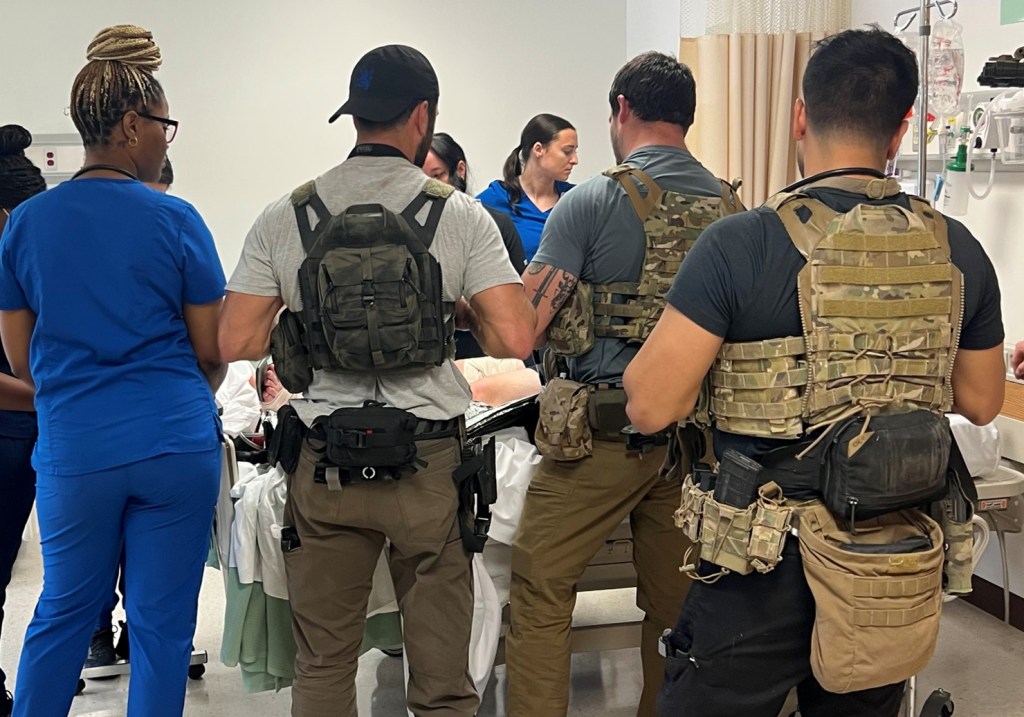
From outside the scenario it’s usually obvious within minutes which teams are being proactive and which are just reacting to whatever happened last. You can feel it accumulate, the smell of stress in the room. The reactive teams are always chasing something. The blood pressure drops and the whole team fixates on the blood pressure. Someone notices the oxygen saturation and the group pivots to the airway. The radio interrupts, someone asks a random question, or someone discovers the ketamine is almost out. The team spends the day putting out one small fire after another, working hard the entire time, and falling steadily further behind the patient. Mistakes compound, everyone gets more stressed, more fatigued, more prone to error, hungrier and thirstier than they realize, and the spiral continues. No one on that team is lazy. They’re simply chasing their tails.
The proactive teams look, from the outside, almost slower, and yet they get more done anyway. They work from a process. They know what problem they’re actually solving, what they’re worried about next, and what information they’re waiting on before committing to another decision. They set aside what’s unimportant instead of chasing every number a proctor throws at them each time that they take vitals. They keep circling back to the same question: if this patient stays on the current trajectory, what complication comes next, and what can be done now to head it off? The difference isn’t intelligence. It isn’t better procedural skill either. It’s that this team hasn’t gotten lost in the medicine. They’re anchored to a process, and working together toward a common shared goal.
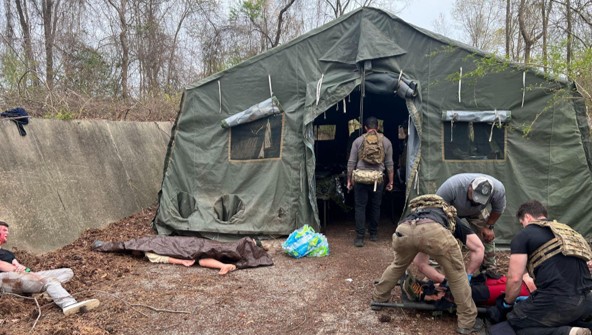
That’s one of the reasons I’ve become something close to an evangelist for prolonged care principles applied as a team discipline rather than an individual one. I use the word evangelist on purpose, ask anyone who’s sat through one of my lectures twice. I don’t think of these principles as just another checklist to memorize. I think of them as a way to organize thought and priorities when everything around you is pulling attention in ten directions at once. The primary reason for this is to make the job of the medic and their team easier so that they can be more effective and give better care under stress. If it doesn’t make the job easier, they won’t do it. Through much trial and error, these ideas were created, tried, and tested by medics for medics. They keep a team asking the same handful of questions on a loop: what’s changed, what hasn’t, what am I worried about next, and what complication can I get ahead of instead of just reacting once it presents?
One of the additions to our courses over the last several years has made a disproportionate difference for the teams that actually stick with it: the tactical timeout. It’s remarkable how fast a busy team stops functioning as a team without anybody noticing. Blood is hanging. Someone’s starting another IV. The radio’s live. Equipment’s being opened. The recorder is trying to catch up. The medic is heads-down on whatever’s directly in front of him. No one is idle. Everyone would swear under oath they understand exactly what’s happening. And yet no one has stopped to ask whether they’re still solving the problem they think they are. That’s before you even factor in the security situation and the operational picture around them, which someone still has to be tracking.
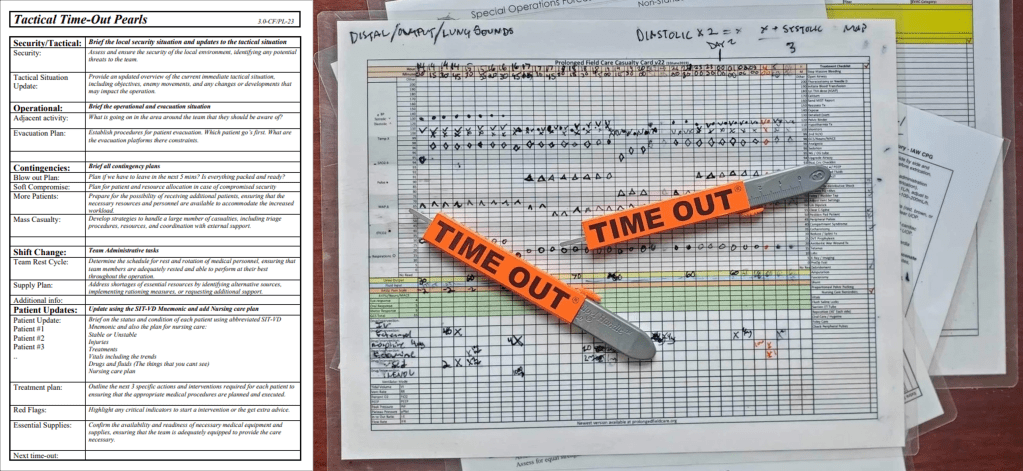
That’s when we call a quick halt for thirty seconds. Not because the team stopped working, but because it stopped working together. Security first. Operational issues and contingencies next. The team sergeant updates logistics, comms, and the evac plan. The recorder or patient lead reads back the trend lines instead of individual numbers. Roles and responsibilities are adjusted. The medic quickly narrates what he believes is happening and why. Someone, usually a non-medic, asks the question no one else thought to ask and they quickly get back on track and re prioritize. The human brain seems to gravitate toward solving the problem that is directly in front of it. The tactical timeout is a pause in the chaos to climb back out of whatever hole the team has dug itself into, take in the whole picture, and confirm the plan still holds before diving back in. It’s easier to climb out of a more shallow hole than to keep digging.
From the beginning we decided to train medics and non-medics together when possible, after splitting them apart for role-specific learning objectives first. In the STORM-2 surgical team courses we still separate people by discipline before bringing them back together for the scenarios, and we’ve expanded on that since. The point was never to blur the lines between roles, or to pretend everyone’s interchangeable, though cross training remains vital. The point is that this is how these teams actually exist once the scenarios end and the patients are real. The goal was never to make everyone a doctor. It was to make the entire team medically useful rowing in the same direction. The medic, or the surgical team lead, still owns the medical decisions and carries the responsibility for them, but that doesn’t mean personally performing every task, tracking every medication time, watching every monitor, answering every radio or sat phone call, and solving every logistical problem alone. A leader trying to do exactly what I’ve spent years warning against, getting lost in the medicine, and it tends to show in the disorganization and frustration.
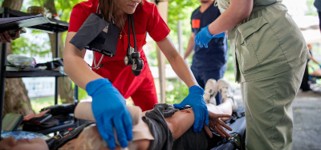
What we’ve found, consistently, is that every time you can move work off the medic without moving the responsibility, the whole team gets stronger. Responsibility, and the decisions attached to it, stay exactly where it belong, but the work itself can be spread out, delegated. Someone else can trend the vitals. Someone else can document. Someone else can prep equipment, track output, swap batteries, keep the patient warm, update higher, prep blood, or just notice something’s changed. None of that replaces the medic/surgeon/anesthetist, it protects their capacity to think, which turns out to be a lot harder to replace than a bag of fluids.
People have one brain. They can start an IV while holding a conversation, or carry equipment while talking on the radio. Human beings are decent at layering routine physical tasks but not good at, no matter how much training’s behind us, is thinking carefully about two or more complicated problems at the same time with other competing priorities. The longer a casualty stays under a team’s care, the more valuable that single brain’s thinking becomes, and that’s what the team structure exists to protect. The recorder stops simply being the person filling out paperwork and becomes the team’s external memory. The senior non-medic stops being an extra pair of hands and became the person responsible for everything happening around the medical problem. Tactical timeouts stop being interruptions and become a check on whether the team was still solving the right problem and on the same page. Even our after-action reviews and debriefs are changing. Instead of asking only whether the medic performed the procedure correctly, which still matters, we are focusing on when the team stopped anticipating, when it turned reactive, when the team got overloaded, and what information existed but never got shared. That’s usually where the process starts to break down, and where the patient starts to decline beyond recovery. Even our role players report that they can tell from the litter.
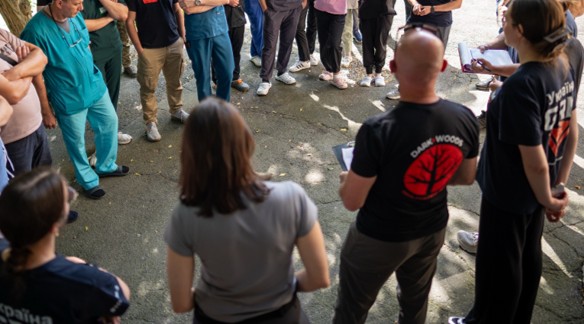
An easy mistake that an instructor can make is assigning fixed jobs before a scenario even starts. Bob, you’re the recorder. Jim, you’re on the airway. Mike, you’ve got logistics. Then Bob would get pulled into something else, effectively written out of the exercise, and documentation would just stop, because “the recorder was gone.” That was the moment it clicked for me. Documentation was never Bob’s responsibility. It was the team’s. Bob just happened to be the one doing it at that moment, and he seemed to be the only person in the room who understood that. We are shifting our training toward protecting a process instead of filling roles, because the medicine is never going to get easier, but a team doesn’t have to fall apart every time one person gets pulled away from a job that was never really theirs alone to begin with.
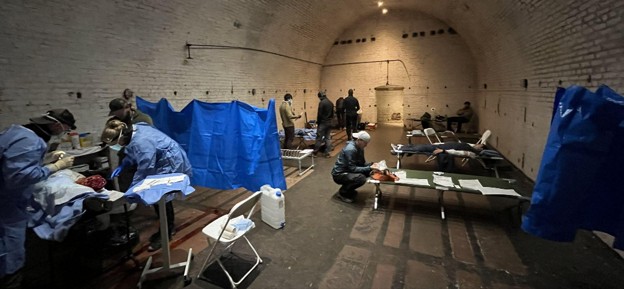
None of this, in the end, is really just about the medic or the surgeon. If you’re the non-medic on the team, or the scrub nurse, this is where you come in. You don’t need a medical background to trend a vital sign, keep the timeline straight, watch the clock on the next dose, or notice the fluids running low before it becomes an emergency. That’s not filler work while you wait for something real to do. It is the job. Thinking and anticipating is the scarcest resource on the team, and protecting it belongs to everyone, not just whoever’s got the medical qualification. When scaled from one to multiple casualties, to a real mass-casualty event, at a Role 2 with more patients than hands to treat them, and the same collapse happens faster and with a lot higher stakes. That’s a longer discussion for another piece, but it doesn’t change the fix.
If you thought selling “nursing care” to special operators was hard, try getting them to change the way they interact as a team with deep seated culture and yes, sometimes with a clash of egos. In the case of nursing care, it may not have been sexy, but it was new. Most SOF medics had little to no experience with it, except that it was messy and time consuming. It was an unknown to most and we were just filling in the blanks and doing it in weird, austere places. It turned out to be a much easier marketing campaign than I imagined. New buzzword, new logo, sweet pics on the ‘gram. As they say, variety is the spice of life. Novelty is an easier sell to our special breed of neurodiversity in this community than breaking patterns of behavior, culture, or ‘the way we have always done it.’ Adding some principles that people hadn’t really considered before is similar in nature, especially if it actually helps make their job easier or assuages a fear they may harbor. A fear of inadequacy of some measure… of letting the team down, failure. Once they go beyond thinking of this as merely another tool in their tool chest, and more of a lifeline in the chaos, they are apt to grab hold and buy in.
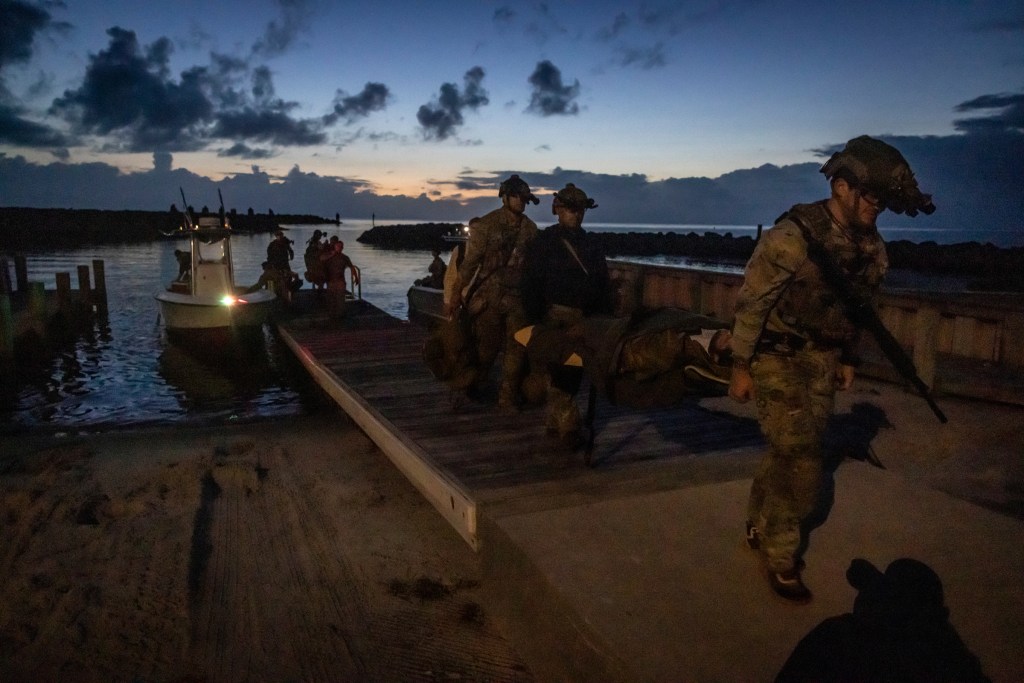
When training a team of personalities, it is extremely helpful to have the whole team bought in and on the same page. The way in is by showing that you understand their plight and that you truly give a shit. (And you do have to truly give a shit.) If the instructor is not bought in and doesn’t understand the uniqueness of the horrible situations these small teams can find themselves in, of being alone and afraid in some far-off place where no one is coming, where they are expected to be the adults, those instructors cannot convey empathy that they don’t have. Without this factor training will still “happen,” facts will be exchanged, techniques refined, people happy enough. I consider those classes the failures. Where the free flow of ideas and problem-solving don’t go beyond mere knowledge transfer. Have their core concerns been heard and addressed? Are they actually equipped to face the challenges that you set out to tackle?
I have been lucky enough to have seen this ‘Lasso Effect’ (after the eternally optimistic and empathetic Ted Lasso) and watch the transformation more times than I can count by working with some amazing people. That I have been privileged to work alongside these and so many others in this field. I could fill volumes with competent, caring people and their selfless achievements. The lesson to take from them, though, is to care to listen and connect. Then you are not just marketing your ideas, you are tearing down barriers to learning and building confidence together.
A twelve-man detachment in the Middle East, a nine-person surgical team anywhere, and a three-person element in Africa have almost nothing in common on paper. What they share is proof of the same principle: a team that talks, prioritizes, documents, decides, and acts together will outperform a more talented team that never learned to do those things under load. Prolonged care was never only a medical problem, and it was never only a special operations problem either. It’s a team problem, and unlike the years it takes to build medical expertise, it’s one you can train in a matter of days. When training time is short, and it always is, spend it on processes, on communication, and on the principles that transfer across any illness and injury pattern.
Don’t get lost in the medicine.
-Paul Loos of Ragged Edge Solutions
 Next Generation Combat Medic
Leave a comment